
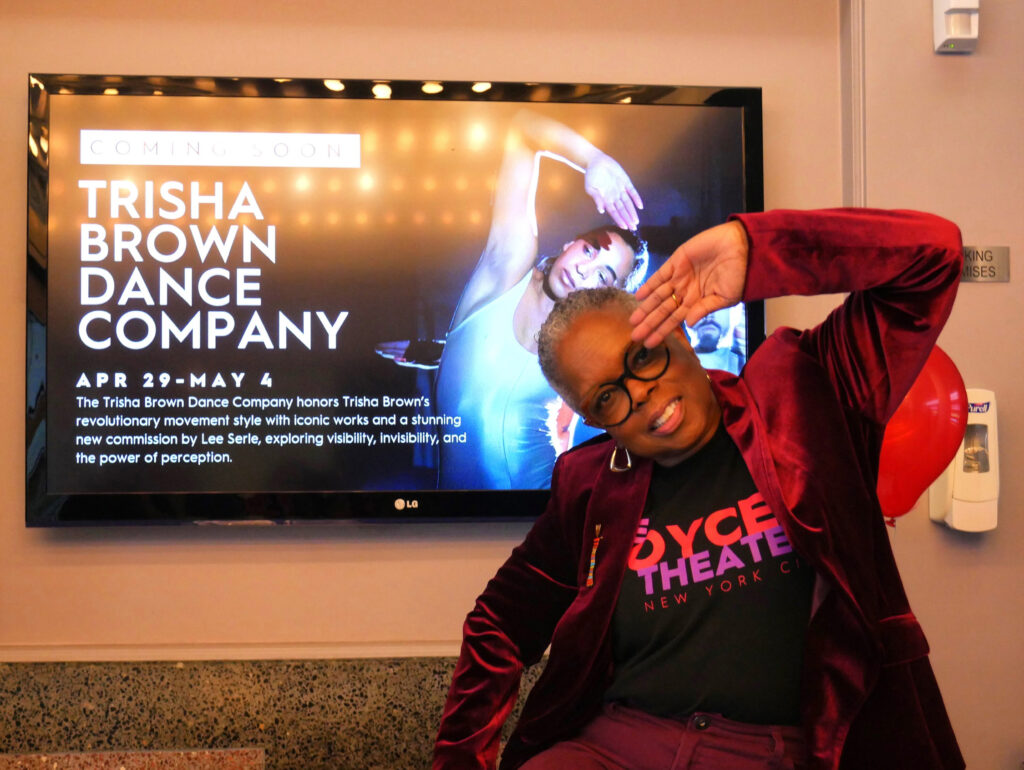
Behind the scenes work is an integral part of a successful production and performance on stage. For over a decade, Heather McCartney, in her position as Director of Dance Education & Family Programs at the Joyce Theater Foundation, has motivated and exposed students to the world of professional dance. Her dedication and enthusiasm was evident as she discussed her experience and responsibilities at the Joyce. Her work exemplifies the process of outreach, engagement and education. These are edited excerpts from our conversation on the phone.
Roger: Your journey in the field of dance has been impressive. How and where did it begin?
Heather: My earliest memory is captured on film of me doing the twist. My mom was a big lover of the arts, having a lot of music going on. We had a piano and drums. She really liked dance. At an early age she was my first choreographer and I would come out and do the entertainment for her parties and soirees. My first stage was the living room. From there she put me in dance classes at the 92nd Street Y. I must have been 6.
Roger: I remember seeing you dance in Marcus Garvey Park. I believe it was an African dance class. Do you still dance?
Heather: I wish I had the time to take classes. Sometimes I even work on the weekends.
Roger: What made you move to education and the administrative side?
Heather: One of my teachers from the Y said, “My education person is going on maternity leave. What are you doing? Are you available?” I said, “Yeah I have the summer off.” So that’s how I got into doing administration. I really didn’t know anything about it but it was on the job learning.
Roger: Describe what you do as Director of Dance Education & Family Programs.
Heather: There are several things that come under my umbrella. The biggest part of my work is working with teaching artists and teachers in schools. I’m responsible for sending teaching artists out to schools in preparation for them to prepare students to come to the Joyce to see live dance. That’s a big part of it. We also invite students on the spectrum and students with disabilities. I also coordinate internships. I’m responsible for getting interns placed throughout our organization. I also run symposiums for special projects.
Roger: What kind of interaction do you have with dancers and choreographers?
Heather: Not much interaction other than making sure the repertoire is appropriate for the students.
Roger: What challenges do you face working with the students and community?
Heather: The students are never really the challenge. We work with private schools, charter schools, public schools. They’re all so different. Some schools have more money. Some have a dance studio. Other times we’re working in a gym or classrooms. So the teachers have to be very adaptable. Money is another challenge
Roger: What kind of reactions do you get from students seeing dance for the first time?
Heather: They say, “Oh Ms. Heather, I liked it.” “Well, what did you like about it?” “It was good.” “What was good about it? How would you describe it to your grandfather who didn’t come to the show or a blind person?” “It’s about building vocabulary, building perception, building imagination. That’s what I like about my job. Pushing students in the way they think. It’s not just the young people K to 12. I have an intern, a college student who wants to be a tap dancer and she never saw flamenco live. She said, “It’s so beautiful.” Those reactions are what I like to hear.
Roger: You chaperoned high school students on an educational trip to Cuba. Could you talk about that experience?
Heather: Sure. That was 2001 and we were associated with Pastors for Peace. It was eye opening for me and for the students. We went to several cities in Cuba and the students got to see how privileged they were, the American students. Stayed at a hostel for several days with kids from high school. At the end of the trip they left their walkmans and baseball caps which was kind of disposal to them but kind of luxuries to the Cuban kids. It was enlightening to see how their perspective had shifted. To me it was culturally very embracing.
My first stage was the living room… My earliest memory is… of me doing the twist… My Mom was a big lover of the Arts… We had a piano and drums… She really liked to dance… she was my first choreographer.
Roger: With the present political climate affecting the arts, what does the future look like to you?
Heather: I hope in some ways that increasing the visibility of local companies will take effect. More visibility for more avant garde work. I think that would be the positive of it. We produce the Malpaso Dance Company from Cuba now. We have to be very careful with the music. How long they stay in America. It’s a big challenge for our Cuban directors but we have a commitment to their companies so we work very tirelessly to make sure they come.
Roger: The Joyce is such an essential and enduring institution of dance. What does it mean to be part of it?
Heather: It’s my dream job, really. I started when I was teaching and started bringing my students to the Joyce. I love the space. It’s intimate. I can introduce students to it. There are not many nosebleed seats (Laughs) I loved it as a teacher. I was a teaching artist for the theater. When my predecessor retired, she recommended I be interviewed.
Roger: What does Heather McCartney’s future look like?
Heather: (Laughs) I hope you can tell I enjoy my job. As long as I’m enjoying it and as long as the Joyce will have me, I hope to continue until it’s no longer a fun place to be.


Leave a Comment