
I’m careful not to get up too quickly. I’m a little unsteady these days. I remember what I tell my seniors in Chair Yoga class. “Get up in stages. Look around. Say, ‘I prepare to walk.’ Then go.” “Good advice,” I think to myself as I stand up. And then, I say, out loud, “I prepare to walk.” I walk six or seven steps to the fireplace and put a new log on the fire. I’m glad to be in the casita I’ve rented in central Mexico where I’ve come to write. A few months ago, I told my therapist, Joan, I was thinking about writing my memoirs. “I’ll do it when I’m ready,” I said. “I have time.” “No, you don’t,” she responded, with an emphasis on “don’t” “You’re 79.”
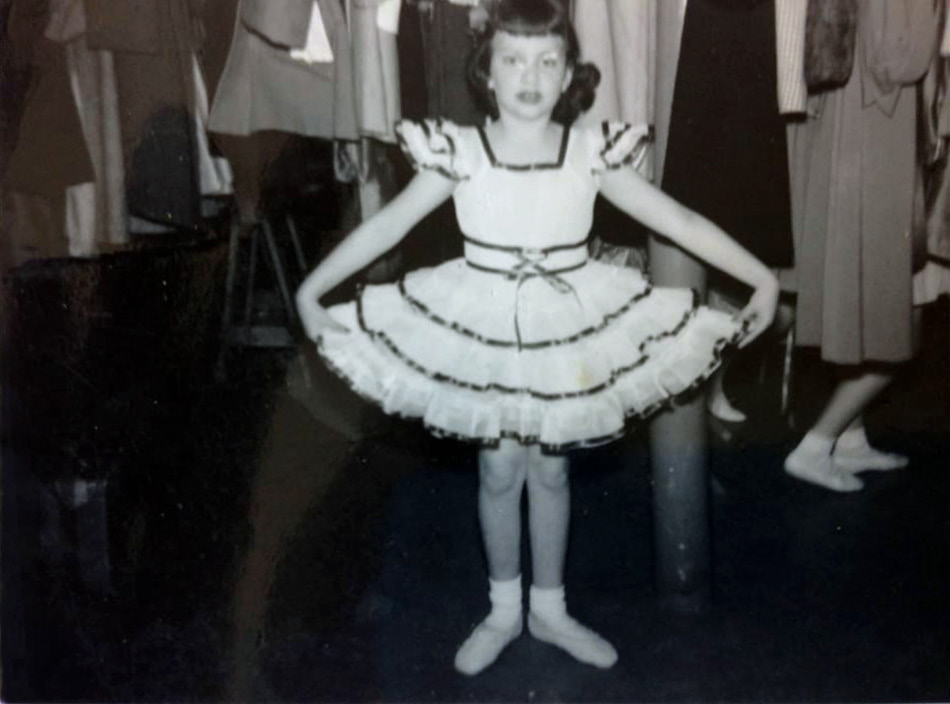
Back on the sofa, I stare at the flames and listen to the crackling sounds of the wood for a while. Then I take out the list of titles of life events which I began to compile on my flight to Mexico City… On the top in the section titled, “Childhood” is “Miss Comer’s Ballet and Tap Class.” I loved dancing even though I wasn’t very good at it. I couldn’t remember the steps, so I made up my own. Miss Comer wasn’t impressed.
A short time before our end-of-year recital, my mother brought me with her to visit her sister in California for two weeks. Before we left she had a heated conversation with Miss Comer about letting me be in the recital even though I would miss the rehearsals. Miss Comer finally gave in but she hid me in the back row with the tall girls.
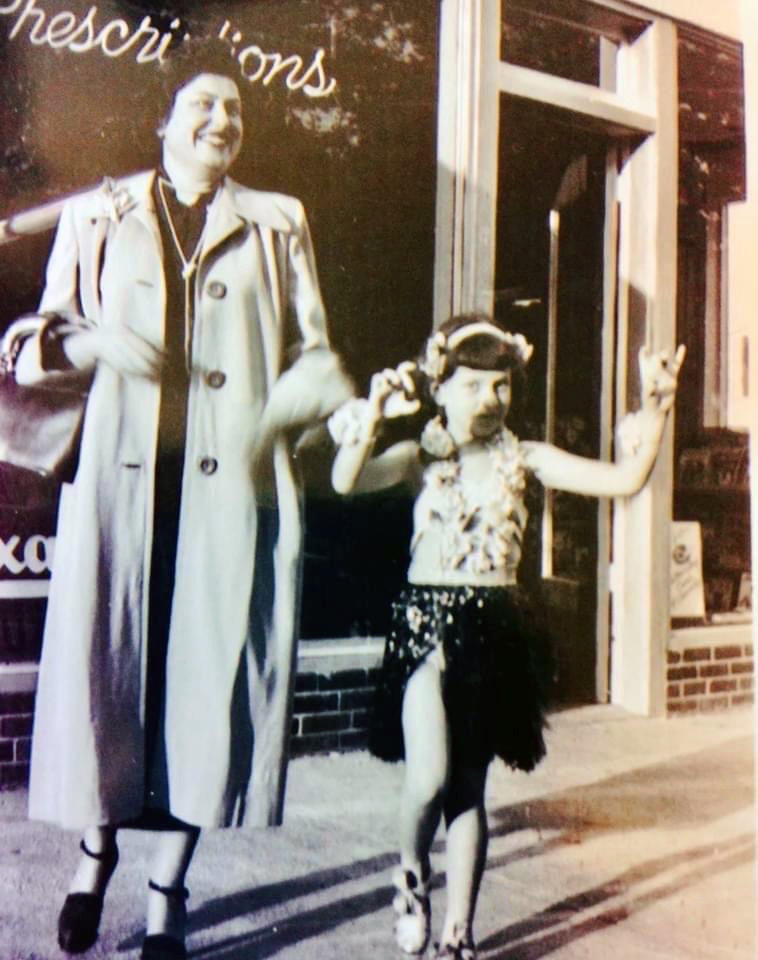
I continued making up dances. Once, my mother and I were in our local grocery store and I burst into my own wild, tap dance up and down the aisle. I remember feeling exhilarated. “Now I’ve got it!” I thought to myself. “Now I’m dancing!” My mother was as horrified as Miss Comer had been. “Stop that!” she yelled. I kept making up dances. Just, not in the grocery store when I was with my mother.
I made up dances when I was alone in the bedroom I shared with my grandmother. I would close the door and turn on Dick Clark’s “American Bandstand.” I had a crush on Tony, one of the “regulars.” I would dance with a mop and make believe it was him. My Tony-Mop would whisper in my ear, things like, “I’m yours and you’re mine.” Then he would twirl me around the room. Once, we knocked over my grandmother’s dressing table with all her perfume bottles on it and my accordion music stand. “Lady of Spain,” “Bicycle Build for Two,” and the rest of my sheet music went flying.
One afternoon, my mother burst into the room and yelled so that she would be sure to be heard above the blaring music, “Turn that music down! And stop dancing with a mop!” So many opportunities to feel shame. I look at my list of titles again.
“High School Graduation” … “Leaving for College” … I can see myself saying goodbye to my parents when they leave me off for college at The University of Connecticut where I would study Physical Therapy. I can feel a lump in my throat as I remember their car pulling away and turning my back to the street as I walk up the hill to my dormitory. But I don’t turn back. I never live at home again.
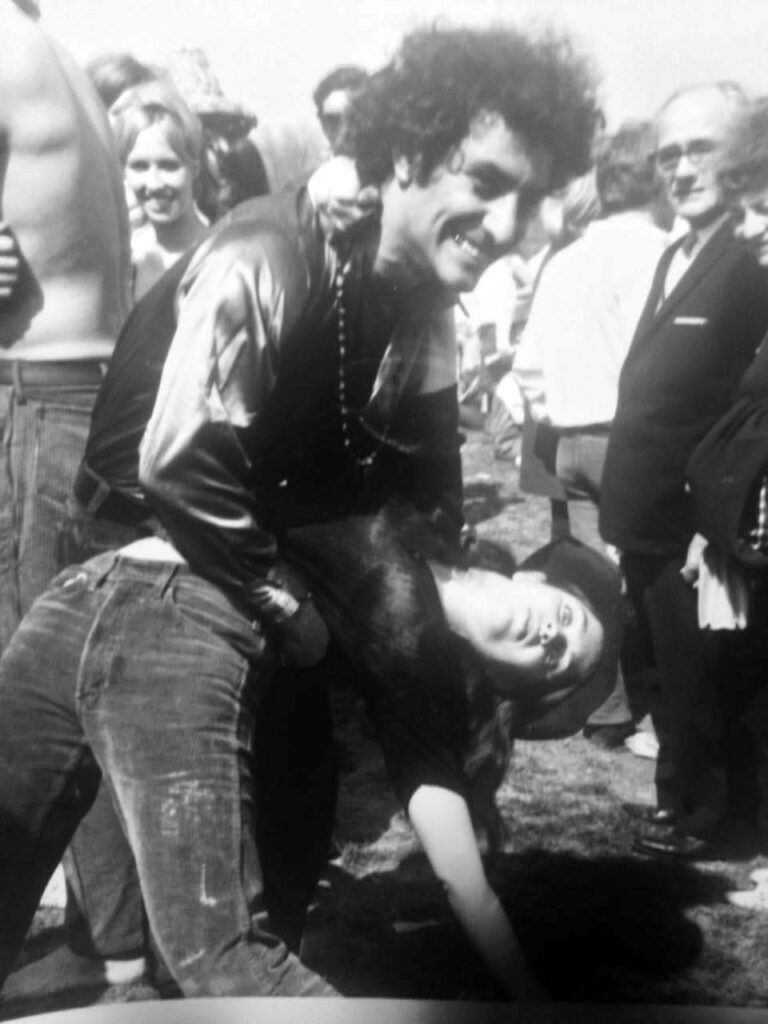
Senior year. I’m majoring in physical therapy. I have a boyfriend, Dick, a scruffy English major who wears sandals, carries a green book bag and is against the Vietnam war. My friend, Sharon, says he’s a “beatnik.” He talks to me about books and takes me to an antiwar demonstration. Physical therapy is beginning to feel stifling. I want a liberal arts education. I want to be a beatnik. I want to be against the war. I change my major to English, although I’m not a reader. I’m floundering.
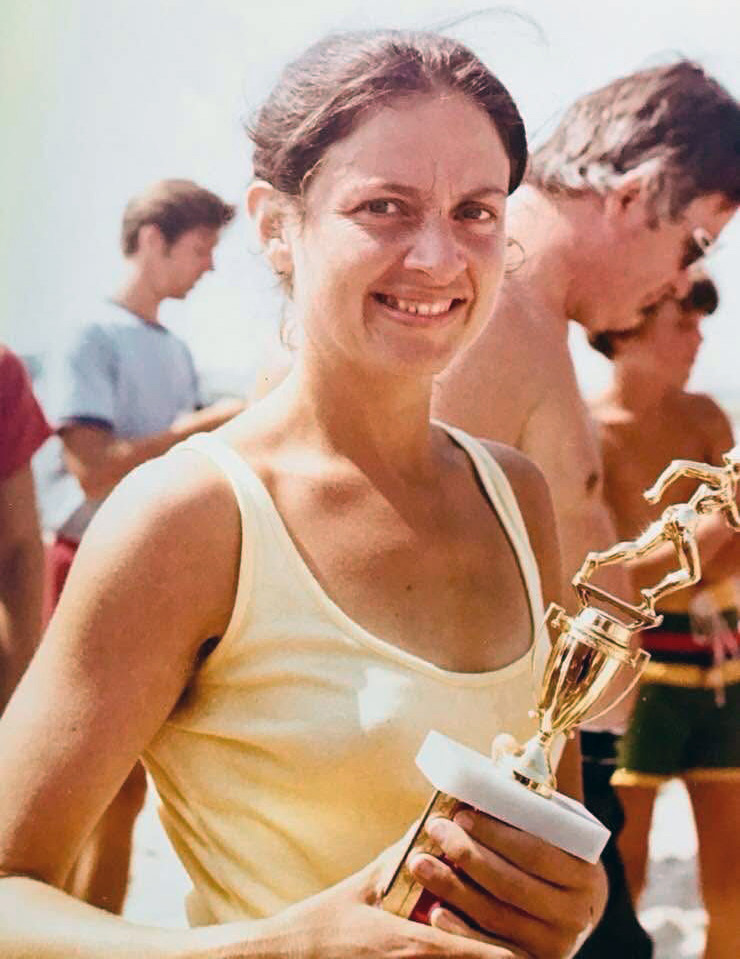
Sharon tells me I’m a good dancer after watching me dance by myself at a fraternity party. She invites me to take Martha Graham’s two-week Christmas Intensive with her. I sign up. We’re off to New York City. Martha Graham is standing before us in her studio on East 63rd St. She’s in her 90’s, has long gray hair and her former beauty is apparent to me. She wears stage make-up and is wobbly in her high heels. (I had heard that she had a drinking problem.) Martha has interrupted our class to speak to a group of 20-25 admiring young dance students in her beginner class. “If someone asks me if they should be a dancer,” she says in her uber-dramatic style, “I always say, ‘NO.’ If you must ask if you should be a dancer then you shouldn’t be a dancer. You dance because that’s all that matters!”
It’s 1966. I’m twenty-two, late to start developing the technique necessary to become a dancer. But something in me comes to life. For the next two weeks, I bend, reach and stretch my body and my spirit in ways that I had never imagined possible. At the end of the Christmas intensive, I return to UConn. Every weekend I take the four-hour train ride (one-way) from Storrs, Connecticut to NYC to take classes at Martha Graham’s studio.
As soon as I graduate, I move to NYC to study dance. One night my mother’s voice crashes into the $28/month, lower east side apartment I’m subletting from a friend, via telephone. “What are you going to do with dance?” she bellows into my ear. “You’re too old to become a dancer. I was so proud when I used to tell my friends you were going to be a physical therapist. Now they ask me what my daughter is doing, and I say, ‘Oh she’s an English major. Or, oh she’s dancing.’ I don’t know what to say. I was so proud when you were going to be a physical therapist.” As she speaks, I’m practicing my choreography assignment in my tiny kitchen, between the bathtub and the refrigerator.
David Wood, from Martha Graham’s company, stops his technique class to humiliate me in front of a huge group of about 100 dancers at Connecticut College’s Summer Dance Program. The technique he had instructed us to do was difficult for me, so I modified it. “I’m not sure what it is you’re doing in here, Roberta,” he says, through thinning lips, “but it’s not dance.”
I feel the blood draining from my skin and for an instant, I can’t feel my body. One of Martha Graham’s lead dancers has just told me I’m worthless. Then I close my eyes tight and whisper Martha Graham’s words, “You dance because that’s all that matters.” I keep moving.
A few days later, my choreography teacher, Lucas Hoving, tells me that in my own compositions, my technique is magical. Then he says something that changed my life. “You dance to your own music.” Lucas suggests I audition for Juilliard (he’s on the staff) and major in choreography. I gasp. “Juilliard?” I nearly shout. “Me?” He swiftly turns his back to me, gathers his Norwegian newspaper and roll of toilet paper (It’s hay fever season) and walks briskly out of the room.
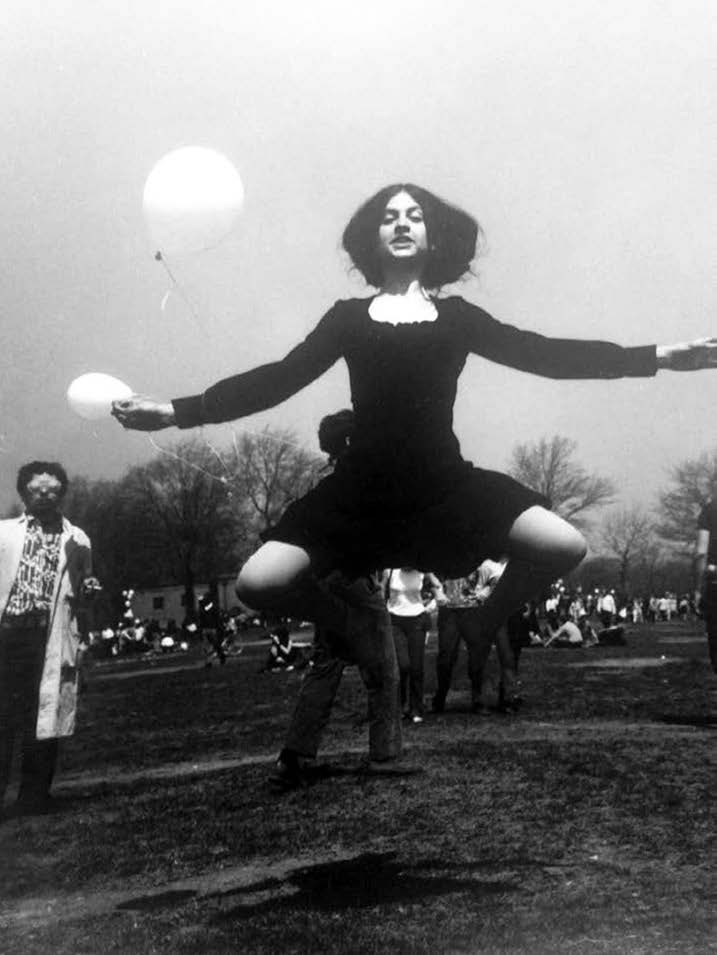
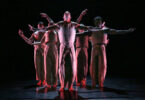
I’m accepted at Juilliard! I dance for hours every day. I twist myself into La Pieta in Martha Graham’s class. I’m a robot in Alwin Nikolais’ class. Anna Sokolow tells us to compose a dance about ice cream, and I choose Fudge Ripple. José Limón lifts his magic arm and we’re all airborne; he lowers his arm, and we melt into the floor. “People who never try anything never fall” he insists. “So, leap into the air! Don’t be afraid to fly!”
I eat yogurt with anorexic girls (Do I look fat?) in the school’s cafeteria. One day, during lunch, I walk over to Lucas’ table, where he is sitting alone, reading his newspaper and ask him if he pulled strings to get me into Juilliard. In his elegant Norwegian accent, he answers, “Juilliard has a reputation to uphold, Roberta. They don’t accept shit.” Decades later, a dancer friend calls to tell me Lucas died. I weep for days.
I stay at Juilliard for a year and then leave. They don’t have a Masters’ program in dance, and I already have a split Bachelor’s degree (English/Physical Therapy). Besides, I’m beginning to realize the best way to learn to dance is to dance. Not to study about the theory and history of the art.
I travel. On a visit to Rome, I visit the Sistine Chapel. I lay on my back on one of the pews and stare at the ceiling for hours. When I return to New York I perform “The Creation of Adam” with a group based in Saint Mark’s in the Bowery, a church in the lower east side. One day, the dancer who plays, “God” is out sick with a cold, and I’m chosen to replace him. On the night Martin Luther King dies we compose a dance of despair.
A man I meet in Oaxaca turns me on to politics. Sam and I come back to New York together and I join the Pageant Players, an antiwar theater group that relies on movement to create striking mesages. In our play, Cornflakes, I give birth to Capitalism. Then, someone climbs a ladder and deposits money into the mouth of a gigantic papier mâché Uncle Sam who eats dollar bills and shits bombs.
I join It’s All Right to be Woman Theater, a feminist troupe. We perform stories from our lives and use our bodies to create group images that are alternately hilarious and heartbreaking. I choose to see this group as a tiny part of a huge movement that changed the role of women in society. It was the single most powerful influence on my life.
I remember Martha Graham’s words, “The dancer ceases to exist the moment the dance ends.” At twenty-six, I stop dancing to study karate fulltime. When I emerge from the ephemeral world of dance, the dancer in me vanishes. But I now know that nothing is ephemeral. I brought dance with me to karate. I brought karate with me to yoga. And in several years, I would bring them all into my writing.
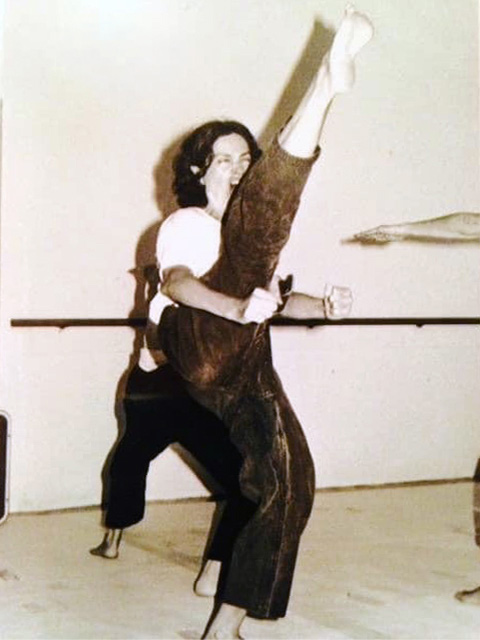
I get a black belt in karate. Then, I get a second-degree black belt. For twenty years I teach Tae Kwon Do to women in the “Karate School for Women,” the school I founded and directed in the heart of Greenwich Village. Hundreds of women kick and punch their way into self-empowerment. At a women’s martial arts camp, my students are impressed by students in other schools who call their teachers “Sensei,” which means, “master” in Japanese. They start calling me “sensei.” I resist, telling them I think it’s pretentious. “I’m not a master,” I tell them. “And besides,” I say, “Tae Kwon Do is Korean, not Japanese.” I tell them to keep calling me “Roberta.” I remind them that our school is an alternative to traditional martial arts schools.
When they insist on finding another name for me, I joke, “How about ‘Shithead?’ ” It seems like a suitable mockery. Students from other schools are waiting on their instructors, bowing to them and shouting, “Yes, Sensei” and “No, Sensei” and my students are calling me “Shithead.” Some of them take it too far. When, after a few days they’re still calling me “Shithead”, I tell them to cut it out. Immediately, I’m ”Roberta” again. In a New York Times article about the school, (12/24/1996) a student is quoted, saying, “Roberta is humorous and irreverent, but her irreverence never takes away from the reverence of karate.”
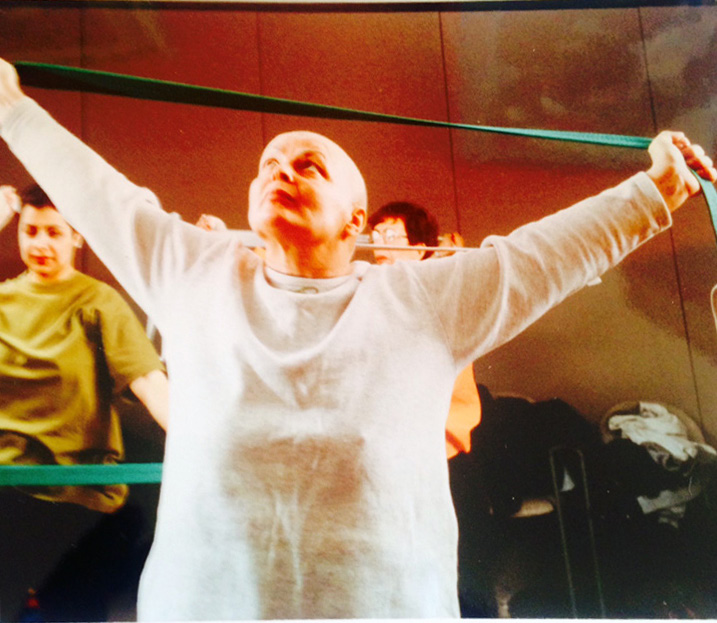
Breast cancer alters the landscape of my chest and of my sensibilities. Yoga whispers my name and calls me home. Soon I’m teaching the gentler art. In my class for people with cancer, wigs fall to the floor in Downward Dog pose. Bald yogis rise in a collective Warrior pose. At the end of one session a student tells us that the highlight of the class was that “nobody threw up today.” Suddenly I’m working at every major hospital in New York City and doing guest presentations in Mexico City and in the jungle in northern Guatemala.
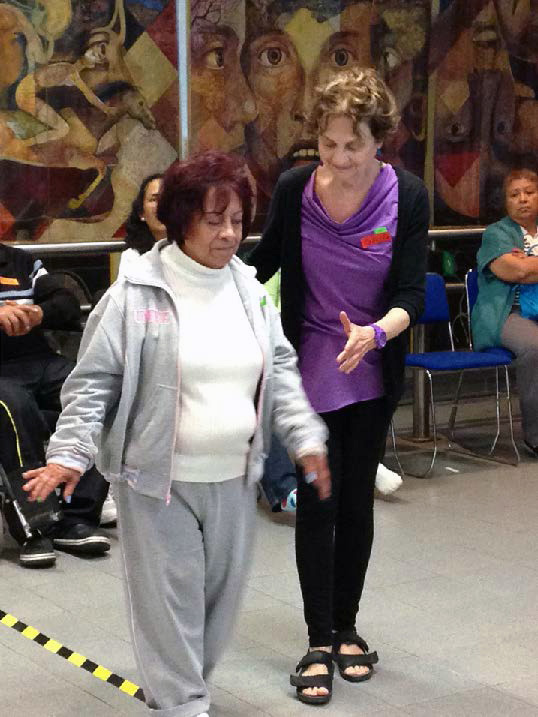
In Yoga for People with Movement Disorders, I put a long piece of bright yellow electrical tape on the floor and announce to the students, “Today we’re going to walk on a tightrope.” Katherine, a woman in her late seventies who has Parkinson’s, says, “I think I may need my walker for this one.” She bursts out laughing and the rest of us join in. We cheer for each person who completes this daring act. Thirty years later I’m still doing this work.
Writing is an opportunity for me to choreograph words. My pen bends and twists and stretches and spills ink onto the paper. I read to whomever will listen. I’ve had friends, family members and lovers who “get” me and some who never will. It’s a life. Get on with it. Keep moving.
In Central America, I retreat into a magic cottage surrounded by coffee groves and lemons the size of grapefruit. My bright little room is filled with fairy dust, a mattress, a table and chair, and floor-to-ceiling towers of Spanish grammar books. After a month of immersion, I answer a knock on my door and when I open my mouth to speak flocks of wild geese fly out of my throat. “Siempre sabia que podía volar y por eso no tenía miedo.” I always knew that I could fly and that’s why I wasn’t afraid. G&S

Leave a Comment