
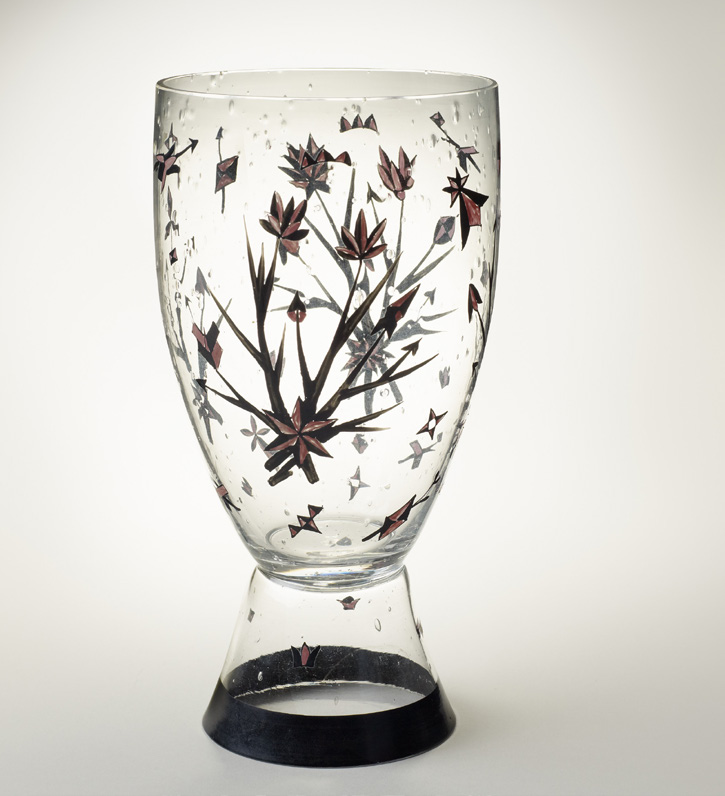
The Jewish Museum’s new exhibition offers a rich picture of Vienna’s artistic scene between 1903 and 1932. On view through November 17, it is a don’t-miss exhibition that brings to life the largely forgotten work of a remarkable group of Jewish women who broke the rules. Determined to infuse fashion, interior design, and the decorative arts with ornament, color, and imagination, they transformed the boundaries between fine art and everyday life. As the museum’s director, James S. Snyder, notes, the exhibition illuminates the central role these women played in shaping modernity.
That role had traditionally been reserved for men. In Vienna, an avant-garde circle of artists—including Gustav Klimt, Josef Hoffmann, and Koloman Moser—challenged the conservative state of Viennese art through the movement known as the Vienna Secession.
Their progressive motto was: “To every age its art; to art its freedom.” Together they founded the Wiener Werkstätte (Viennese Workshops), a collaborative enterprise devoted to every aspect of design. Crucially, women were welcomed, employed, and paid for their work. One of the Werkstätte’s central ideals was the unity of the arts. Fashion, furniture, interior design, textiles, and decorative objects were all considered worthy artistic pursuits. Everything—from toys to tarot cards—could be art.
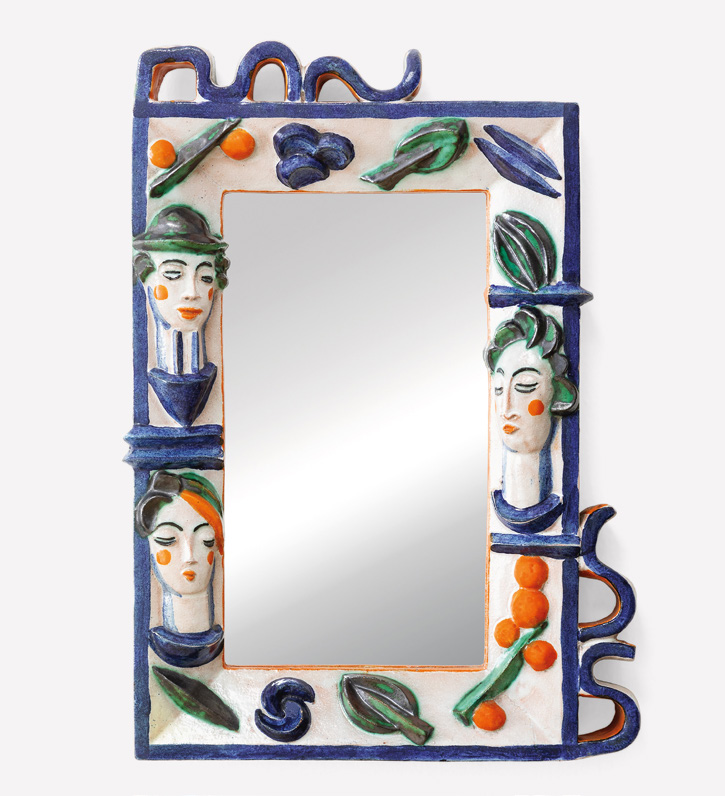
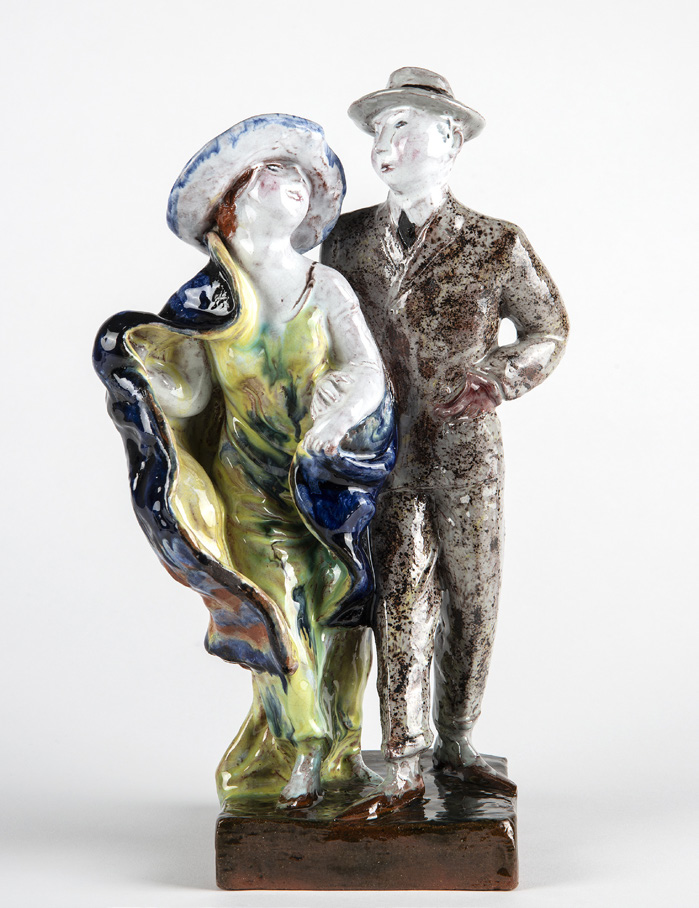
That is what makes this exhibition so engaging. Among its highlights are the stunning ceramic sculptures by Vally Wieselthier, whose expressive female figures, with their voluptuous eyes and beguiling hats, radiate wit and personality. Her Mirror with Masks is another delightful work that demonstrates why she was so admired by her Secessionist peers. Wieselthier emerges as one of the stars of this fascinating exhibition, which celebrates roughly thirty women who worked at the Wiener Werkstätte. Also on display are her inventive ceramics, from elegant coffee services to striking textile designs that would feel perfectly at home in the pages of Architectural Digest.
“We had a huge studio. Each of us got a key, and we had all the workshops imaginable at our disposal. We also had the best-trained foremen and workers and all the time and materials we desired. We simply did as we pleased, and whenever the Wiener Werkstätte sold one of our products, the lucky winner threw a big party,” Wieselthier later recalled.
Another outstanding artist is Felice Rix, who later married a Japanese architect associated with Josef Hoffmann’s studio. Rix was extraordinarily versatile. She designed toys, glassware, tableware, posters, and even pillows. Especially memorable are her whimsical baby rattle, a papier-mâché bird, and a remarkably contemporary silk blouse.
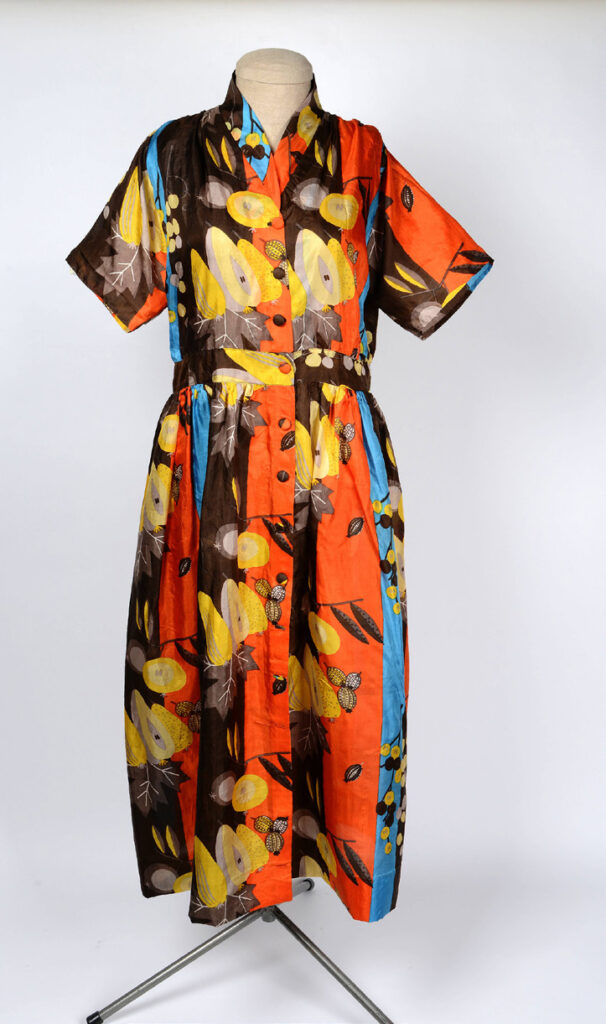
Equally chic and modern is a dress by Maria Likarz-Strauss. It embodies the Werkstätte’s new aesthetic—soft, flowing lines and opulent colors that celebrated the individuality of women rather than confining them to tradition. The Wiener Werkstätte’s fashions became immensely popular among Vienna’s high society. One socialite even referred to herself as “a walking advertisement for the Wiener Werkstätte.” With the enthusiastic support of the city’s cultural elite, the workshop quickly earned prestige. Its furniture, jewelry, textiles, and clothing all conveyed a progressive outlook and a distinctly modern sensibility.

Patronage of prominent Viennese women, including Adele Bloch-Bauer and Berta Zuckerkandl, also played a vital role in the Werkstätte’s success. They wore its fashions and furnished their homes with its designs, helping to establish its reputation both in Austria and abroad.
Active from 1903 to 1932, the Wiener Werkstätte designed, produced, and sold an extraordinary body of work. More than 200 objects created by these gifted Jewish women are featured in this exhibition, finally giving them the recognition they have long deserved.
Despite its artistic success, however, the Wiener Werkstätte struggled financially and was forced to close in 1932. The stock market crash of 1929 devastated its clientele as many patrons lost their fortunes. By 1934, Austria’s authoritarian government had effectively brought Viennese avant-garde culture to an end. What had once been a vibrant celebration of experimentation and nonconformity gave way to antisemitism and the rise of National Socialist ideology.

August 1924. Printed plainweave silk, 16 1/8″ × 15 ¹/₁₆”.
MAK – Museum of Applied Arts, Vienna. Donation, 1955, WWS 595.
Photo: © MAK/Branislav Djordjevic
Yet the Wiener Werkstätte left an enduring legacy: a reverence for craftsmanship, innovation, and fearless creativity. This splendid exhibition reveals the artistry and freewheeling talent of an extraordinary generation of women whose patrons embraced opulence, experimentation, and artistic plurality. More than simply restoring forgotten names to history, it reminds us that these women helped define what modern design could be. G&S

Leave a Comment