
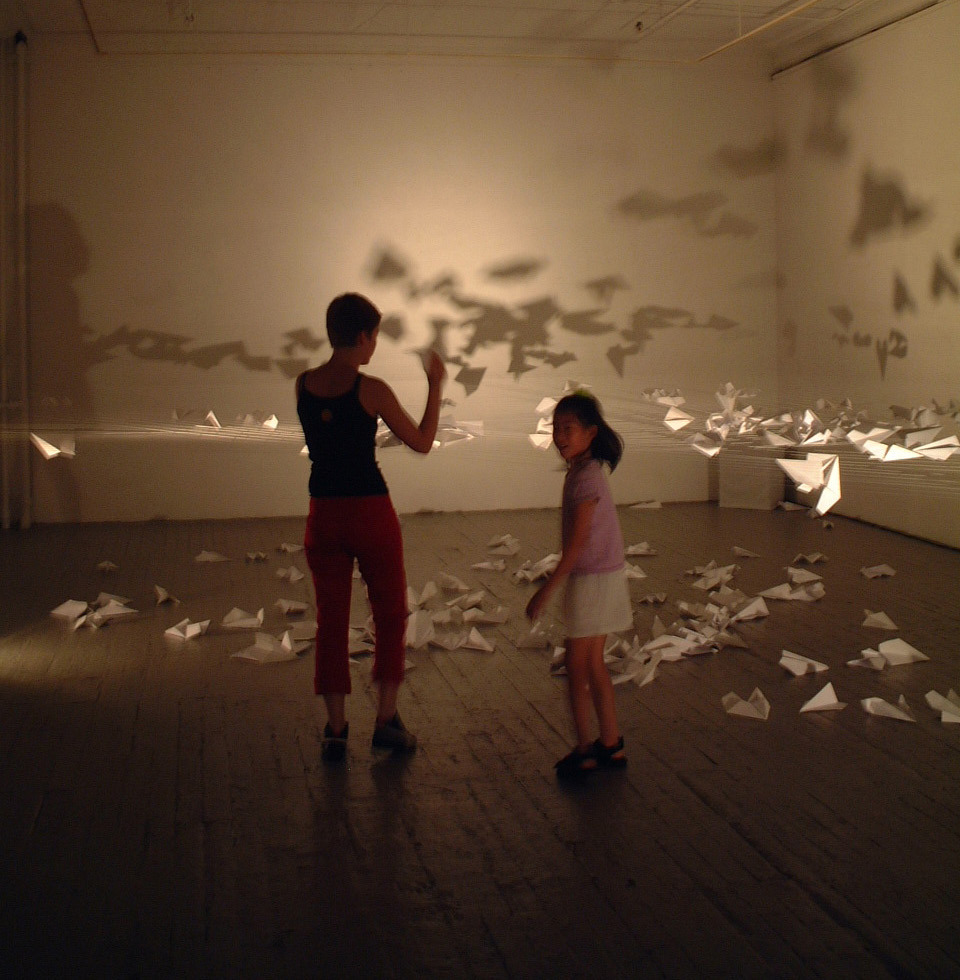
The New York School, that birthed Abstract Expressionism in the 1940s, is often cited as the pivotal moment when New York City became the art capital of the world. However, it was not as simple as that. After WWII, Paris re-emerged as the mecca for art and American artists returned in droves to pay homage to Paris. It was not until the 1950s and 60s, with the advent of artist-run galleries which fostered a wave of avant-garde artists, that the momentum returned to New York and has arguably remained to this day.
With 20/20 hindsight, the 9th Street Art Exhibition of Paintings and Sculpture in 1951 was another such key turning point. It was the first major artist-led exhibition in New York, with 74 abstract artists participating, partly funded and curated by the future gallerist Leo Castelli. The show was a huge success, with notable art critics, museum curators and collectors praising the art, as well as validating and promoting the Abstract Expressionist movement. The commercial and monied uptown galleries of 57th Street and Madison Avenue, who were heavily vested in this movement, were ecstatic.
Downtown, however, there were many artists who were developing more experimental work or were just not into the abstraction style. They were struggling to find galleries to show their work. The 9th Street exhibition made some artists realize that they could run galleries themselves and determine who and what should be shown. They would show art for their intrinsic and artistic value, not because art could be sold commercially. It is in this environment that artist-run galleries and co-operatives were born. According to Ed McCormack, founder of Gallery&Studio and member of Brata Gallery, artist-run galleries allowed artists to “ride the erratic wave of the emerging zeitgeist, into the wide-open future” of the New York art scene. Artist-run galleries and cooperative galleries are both operated by artists.
Cooperatives, however, are formal organizations with equal membership, democratic decision making, shared running costs, often covered by fees, while in artist-run galleries one or a few artists may take on organizational responsibilities and invite other artists to exhibit their work.
The first wave of significant artist-run galleries started with Tanager Gallery (1952), Hansa Gallery (1952) and Brata (1957). At the peak there were about 20 galleries along 10th Street providing an alternative to the exclusive uptown galleries. Ed McCormack described “an outlaw spirit of authentic anti-materialism…a spirit of true democracy…and speaking scornfully of those who had sold out and gone commercial.” Some lasted a few years, some up to ten years, and a select few longer. Many of these galleries moved on or closed, either when leases were up, the money ran out or the members changed.
A second wave of cooperatives started in the late 1960/70s, around Soho and Lower Manhattan, where many artists lived. First Street Gallery, Bowery Gallery, Prince Street Gallery were part of this new group. Amongst them was 55 Mercer Gallery, which opened in 1969, offering solo shows to its members. It gained an early reputation “of artists, by artists, and for artists.” It is one of the few that continue to exist to the present day.
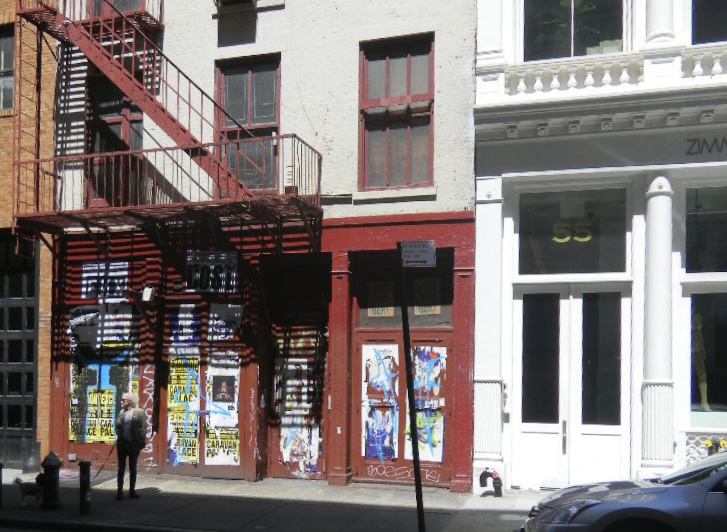
57 years after its inception, Yosuke Ito, a member artist of 55 Mercer Gallery, is presenting “Practicing Memory: 55 Mercer and the Living Archive.”
“This project rejects the notion of the archive as a static collection of historical artifacts. Instead, it treats the archive as a Möbius strip: a continuous, non-linear space where the front and back of time—past and present—collapse into a singular, generative experience. The act of looking back is framed not as nostalgia, but as a visceral artistic practice of overwriting memory. By reactivating archival materials through the current practices of long-standing members, the project seeks to reveal the spatial and ontological essence of the artist-run model.”
A two-part exhibition, the first displays 55 Mercer’s “digitized documents, installation photographs and correspondence from the 1970s through the 2000s.” The second part will showcase six artists who have links to 55 Mercer at the original location and have been part of the co-operative landscape of New York: Peter Charlap, Yosuke Ito, Annette Morriss, Ed Rath, Judy Russell and Richard Pitts. They will “present works that navigate the tension between their personal histories and the collective history of 55 Mercer Gallery,” showing works exploring the lifetime of their artistic careers.
Underlying both parts of this exhibition is the concept that everything, including archival documentation and artwork, represents more than just a static point. Their essence evolves as time passes and the authors’, artists’, and viewers’ experiences progress. In art retrospectives, one can view how an artist’s work, career, and place in or impact on history and its environment changes as time moves on. Richard Pitts, one of the participating artists who helped refine Ito’s project concept, says, “It is a continuum—a living record of an artist’s dialogue with time, form, and perception…transform(ing) memory into space, and space into experience.”
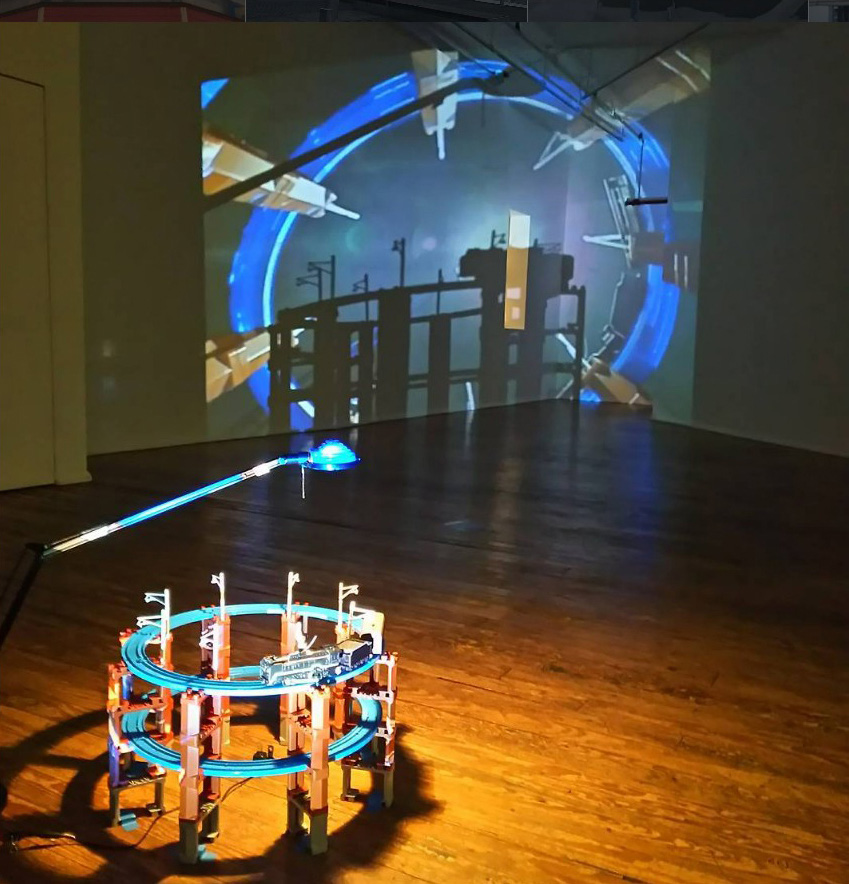
Yosuke Ito, the director of the “Practicing Memory” project, is a Japanese artist, teacher and art researcher, who came to New York in the 1990s and discovered the artist-run galleries and joined 55 Mercer Gallery. As time passed, he realized that historical testimonies regarding artist-run culture were remarkably scarce and felt the urgency to help record “buried memories.” He explains that “an artist-run archive is not a static endpoint, but a creative catalyst—what I call a ‘historical collage’.” His aim is to “spark a ‘chemical reaction’, not just preserving (the archives) in a vacuum…but actively ‘overwritten’ by others, allowing new forms of autonomy to emerge from the shared memory.”
55 Mercer Gallery is now in partnership with Noho Gallery since 2012, having moved into the Landmark Arts Building on 27th and 28th Streets, where many other artist-run/cooperative galleries now reside.
Today, these artists’ cooperatives are not the outlaws that they used to be in their younger days, but after 75 years, they have gained a reputation that cement their valuable place in the New York art world, with many happily rubbing shoulders with the commercial galleries that they once scorned. The cooperatives continue to perpetuate their authenticity, with the artists determining the validity of the art they show. They nurture the artist community, motivating each other and inspiring the dynamic forefront of the ever-evolving art world. G&S
Exhibiting at Noho/M55 Gallery, May 12-30, 2026
55mercerstreetgallery.com
All photographs by Yosuke Ito


Leave a Comment