
It is no secret that Western and Japanese art have evolved together over the centuries, each inspiring the other, sometimes subtly, sometimes boldly, drawing from their shared sensibilities while reinterpreting them to shape new forms of artistic expression within their own cultural contexts. However, there is less discussion about why Western artists continued to be enticed by Japan and its artists for so long.
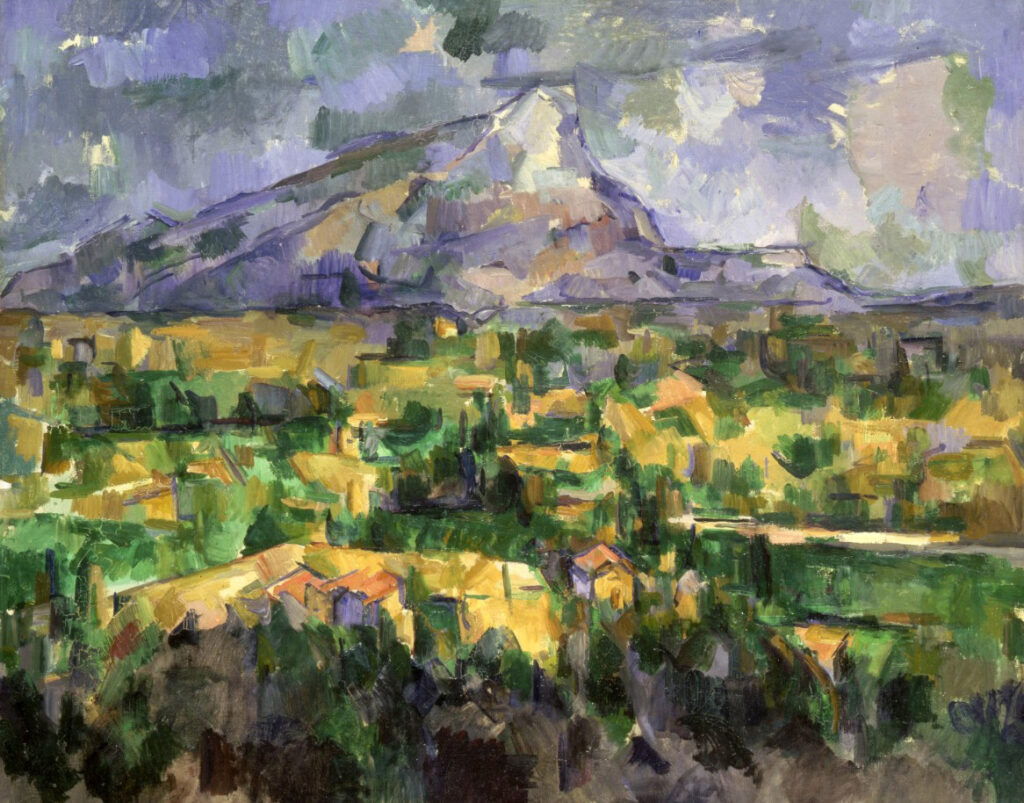
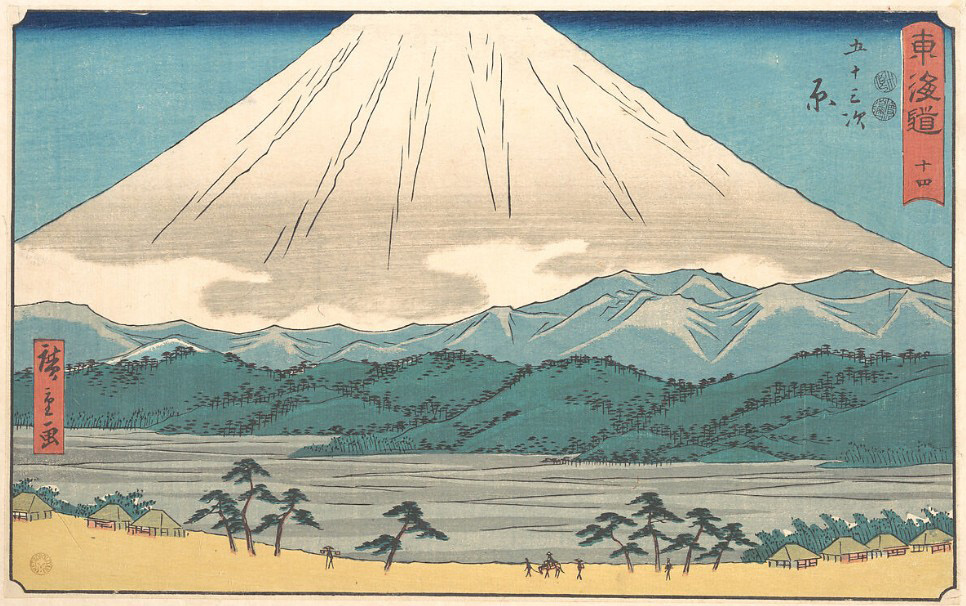
One of the most studied examples of this exchange can be found in the relationship between Impressionism and Ukiyo-e, Japanese woodblock prints. The influence of Ukiyo-e on Western painting is well documented. Claude Monet was deeply inspired by the vibrant color and compositional freedom of these prints, as seen in his Water Lilies series, consisting of over 250 works, as well as in La Japonaise, his portrait of Camille. Vincent van Gogh adopted flattened perspectives, bold outlines, and vivid, unmodulated colors reminiscent of Japanese prints, visible in works such as Sunflowers and The Starry Night. Similarly, Paul Cézanne, fascinated by landscape, absorbed spatial approaches akin to the elevated viewpoints seen in Utagawa Hiroshige’s The Fifty-Three Stations of the Tōkaidō, alongside a broader sensibility toward flat planes and structural composition.
This dialogue did not end with Impressionism. The influence of Ukiyo-e and the wave of Japonisme continued, shaping artists such as Henri de Toulouse-Lautrec. Working in late 19th-century Paris, Toulouse-Lautrec shifted focus away from established techniques, instead capturing the raw, bohemian energy of urban nightlife. Often regarded as a foundational figure in European graphic art, his work echoes Japanese prints not only in composition and line, but in its excitement, prioritizing character, human expressions, and emotional impact over the scientific observation of light. These elements are very much in parallel to Ukiyo-e depicting the people of the Edo period. This may be what intuitively drew Western artists to Japanese art. Moving away from material gratification, towards more egalitarian spirits that nurtured creativity and a participatory nature, that has continuously sustained Japanese art across changing political and social landscapes since the early modern period.
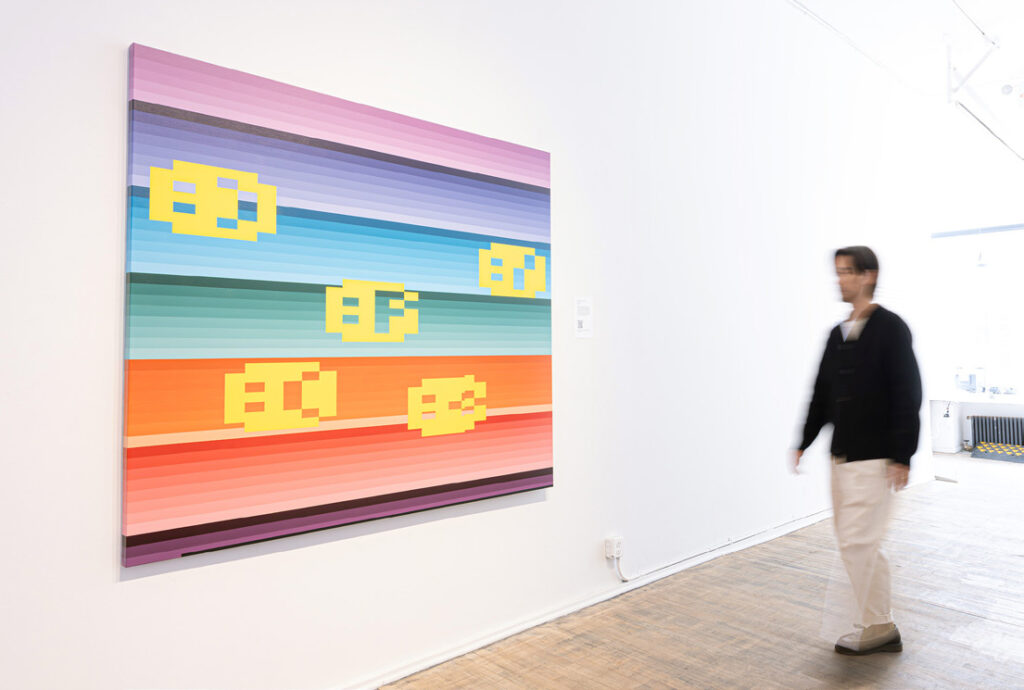
The development, both visual and philosophical, of modern Western movements such as Pop Art, as well as Community and Conceptual Art, can be understood not only as departures from tradition, but as parallel developments that resonate with long-standing principles embedded in Japanese aesthetics, including the approach; a way of doing things, known as the “shokunin spirit.”
In this context, modern Pop Art, often driven by bold, consumer-based imagery, can be seen in parallel with the cultural foundation of the shokunin spirit, which emphasizes devotion to craft. While at first glance the two appear to have opposing characteristics, their parallel lies beneath the surface in how both redefine what art is and who it belongs to. This can also be observed in contemporary practices such as the Global Angel Wings Project, community mural initiatives, and community garden projects in urban areas. In Shokunin practice, repetition becomes a path toward refinement and service; in Pop Art, as seen in the work of Andy Warhol, repetition reflects the mechanisms of mass culture. In both cases, the artist is no longer positioned as a singular genius, but as part of a broader process. Whether through the quiet discipline of the craftsman or the mechanical logic of Warhol’s Factory, art emerges not as an isolated expression, but as something embedded within everyday life, accessible, reproducible, and inseparable from the society that sustains it.
This same foundation has, in many ways, provided a cultural bedrock for the rise of otaku culture, which came to global prominence in the late 1990s and early 2000s: a form of creative production in which anime, manga, and video games are shaped through obsessive dedication and deeply collaborative processes. Here, authorship becomes blurred, and creation is sustained not by individual expression alone, but by collective energy. As history repeats, this form of creative entertainment derived from otaku culture has grown into one of the most influential global consumer cultures and is now increasingly being recognized as art, as seen in the success of Takashi Murakami, whose work combines elements of both shokunin and otaku aesthetics.
During an interview for a Youtube episode, Lucy Dayman, PR manager at NowHere Gallery in Tribeca, New York, noted this creative element in Japanese artists is often rooted in what is described as “shokunin kishitsu”—the “craftsman’s spirit”—an attitude that prioritizes discipline, care, and an enduring commitment to one’s work. This spirit continues to underpin both traditional practices and contemporary cultural production in Japan. The primary difference lies in the medium, whether expressed through traditional forms or through digital and pixel-based creations.
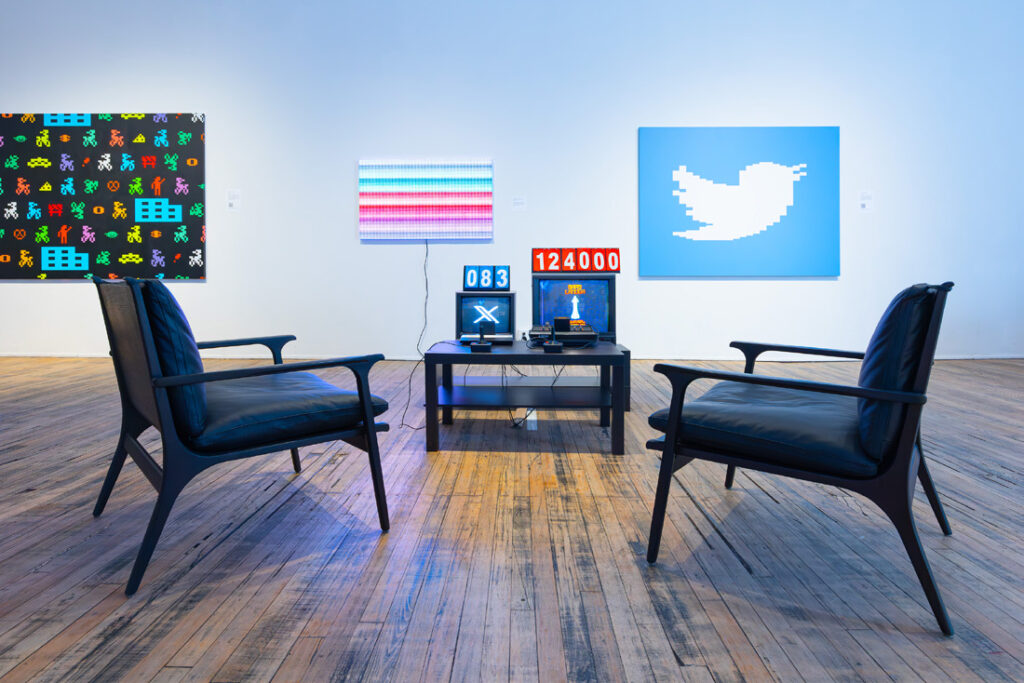
Today, as we move increasingly toward a world shaped by artificial intelligence, the conditions of creation, process, and rhythm are once again shifting rapidly. What emerges may not be a simple extension of familiar human expression, but something reconfigured and formed through calibration, adaptation, and hybrid modes of creation. In such a landscape, the cultural frameworks discussed earlier may not disappear but instead be reinterpreted.
If a new global order of art and expression begins to take shape, one in which cultures once again move in parallel, intersecting and reshaping one another, then the enduring humanistic and communal sensibilities embedded in Japanese art may continue to persist, quietly but profoundly. In this unfolding future, the spirit of Shokunin may remain not as a dominant force, but as a subtle and lasting influence within the evolving world of art and entertainment. G&S


Leave a Comment