
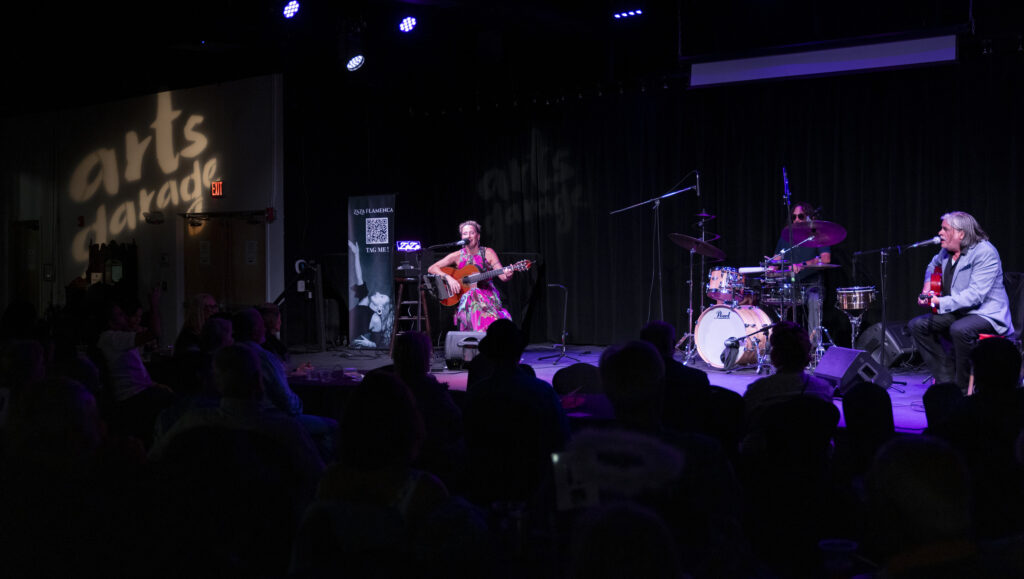
The new curator had been on the job for exactly one hour when she sat down in Marjorie Waldo’s office. Jessica Kirby still carried that quiet alertness of a first day, the kind where you’re listening closely and taking everything in. Marjorie, President and CEO of Arts Garage, didn’t leave her at the edges of the room. She folded her into the conversation, asked her questions, and made sure her voice had space.
At one point, Marjorie leaned across the table and suggested that I spend time with Jessica afterward so her name would be included in the article. One hour into a new position, and her leader had already made sure she would be seen. That gesture set the tone for everything else that followed.
Arts Garage turned fifteen this spring. Marjorie recently celebrated her tenth year with the organization. When she arrived in 2016 the organization was carrying debt and was in need of a reorganization. She addressed the practical realities first, eliminating the red ink, diversifying revenue, and steadying the structure. Rebuilding is one skill and sustained growth is another.
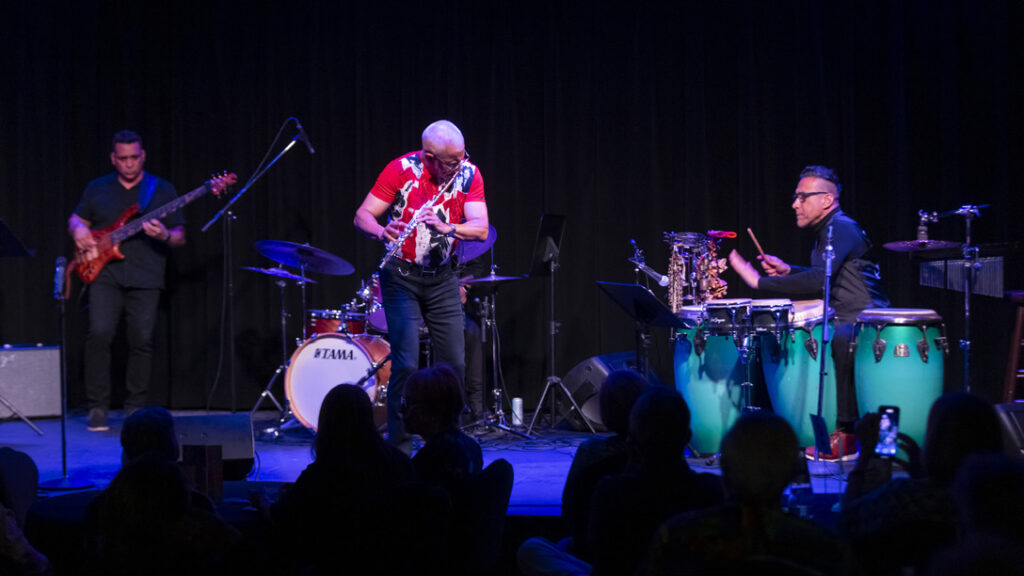
Today, Arts Garage presents more than three hundred events a year and serves close to twenty-nine thousand people across music, theatre, comedy, visual art, and education. The numbers are strong, but numbers rarely tell the truth about a place like this. They tell you what is happening. They do not tell you what it feels like to walk through the doors.
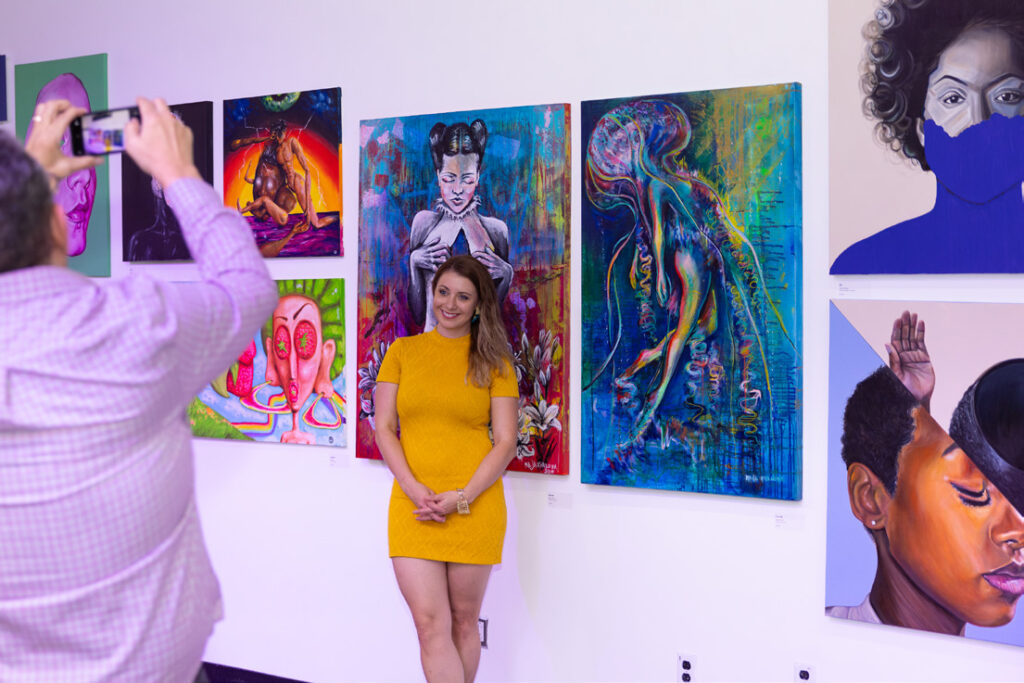
And that is where Arts Garage begins to distinguish itself. Tucked just off the main stage is the Marshall Family Foundation Gallery, a space dedicated to emerging regional artists, many of whom have never had a solo exhibition. The visual arts program is led by curator Jessica Kirby, whose role shapes what appears on those walls. She is herself an artist, drawn to work that ‘desires to tell stories… and making sure everyone’s voice is heard.’
Six themed exhibitions rotate each year, with more than thirty artists given space to show their work. Artists receive seventy percent commission on sales. Gallery sales have exceeded sixty-two thousand dollars, most of which went directly into the hands of working artists at the beginning of their careers.
That is not an add-on. It is a commitment.
Then, there was a noticeable shift in the conversation when she spoke about the artists and the community. The language moved away from operations and into something more immediate. She spoke about emerging artists finding their footing, about what it means to be given a first real audience, and how that moment can quietly change the direction of a life.
The same energy carried into her description of the community. Not as attendees, but as participants. People who return, who recognize something in the work and in each other, who become part of an environment that is still evolving. It wasn’t dramatic. It didn’t need to be. But it was clear where her attention naturally returned.
This is what drives her. Walk through Arts Garage on any given week and that energy is visible. Children in the PLACES! summer camp are learning improv. Underserved community members in the Artists-in-Residence program are being treated as serious creators. A Grammy-winning performer may take the stage one night, followed by a local open mic artist the next. In the gallery, artists whose names are not yet widely known are given the same consideration as those that are. That “yet” carries weight.

The organization itself runs with a relatively small staff of nineteen or twenty people. Marjorie speaks of them easily and specifically, often by name. She continues to personally respond to online reviews. The volunteers, close to one hundred of them, are not peripheral. They are essential to the experience. As she puts it, it is not just the performances or the artwork that define the space, but the people who make it real day to day. You get the sense this is not a talking point. It is how she actually sees it.
There is also a quieter layer to the work. Marjorie may not describe herself as an artist, and in the traditional sense, she isn’t. She runs the organization, oversees programming, manages budgets, and handles the responsibilities that make everything else possible. The unglamorous work is very much hers.
And yet, there is something worth noticing. A person who determines who is given a stage, who is given a wall, and who is offered a first real opportunity is shaping something. Not in the conventional sense, and not with a signature attached, but in a way that has lasting impact. Over time, that kind of discernment begins to look very much like its own form of artistry.
At fifteen years, Arts Garage reflects that instinct. It is structured, sustained, and intentional. As Marjorie moves into her eleventh year leading the organization, what becomes visible is not just growth, but continuity. Care that has been carried forward long enough to take form.
Good intentions are common. Follow-through is not. Arts Garage stands as an example of what happens when both are present. It is a place where individuals are seen before they are widely known, where something in them is given room to emerge, and where the experience of music, art, and community is not separated, but shared.
That is the environment Marjorie Waldo has helped build. It is, quite simply, where the art comes alive. G&S




Leave a Comment