

The former studios (or ateliers) of major artists comprise an unusual type of museum. In fact, many have been converted to museums, but then they no longer resemble a studio. In 1508, Michelangelo bought four adjoining buildings in Florence just north of the Basilica di Santa Croce, where he was working on the facade. He acquired an adjacent structure in 1514. He used the five buildings as his home and workplace, although he also rented out two buildings for the income. The complex was later converted by his great nephew, Michelangelo Buonarroti the Younger, into a museum dedicated to the artist. Its collections include two of Michelangelo’s earliest marble sculptures, as well as several unfinished works and some of the artist’s working tools, in addition to many works of art that the family collected after Michelangelo died. Seeing blocks of marble that he barely worked gave us a whole different understanding of what it means to carve a work of art out of a piece of stone, although Michelangelo left many unfinished sculptures that are now in museums around the world, including the Louvre, the Hermitage and the Met (on loan), and in St. Peter’s.

Another example of a famous artist’s former studio is Picasso’s at 7, rue des Grands Augustin, in one of the oldest districts of Paris, where he lived from 1936–1955, and where he painted Guernica. Some of the easels, props and costumes he worked with have remained in place, erasing any notion that everything in his paintings came from his imagination. The building has been mostly closed since 1955. In 2015, his daughter, Maya Widmaier-Picasso, launched a foundation to reopen the building, enabling our visit years ago. Unfortunately, it is once again closed, although the old plaque remains.
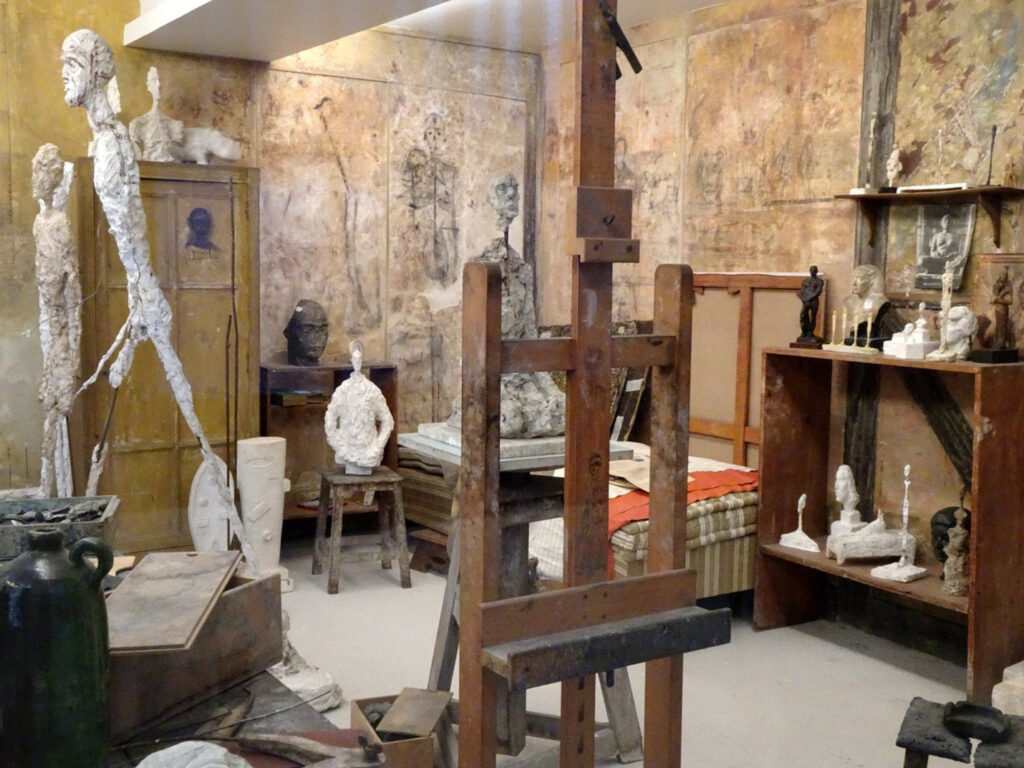
The famous Swiss sculptor Alberto Giacometti lived and worked in Montparnasse for 40 years. His studio has been permanently relocated to the Institut Giacometti near his former home, with the original elements: sculptures, tools and personal objects of the artist. Elsewhere in the Institut there are many of his small works as wells as videos of the artist at work, providing a rare opportunity to see a famous artist creating art.
The Musée National Eugène-Delacroix, part of the Louvre, housed in Delacroix’s former apartment, is dedicated to the painter’s memory. It was created on the initiative of several well-known artists of the 1920s, including Maurice Denis, Paul Signac and Édouard Vuillard. Sketches, finished paintings, prints and drawings in various techniques, are on permanent display shedding light on his creative process. The museum also displays portraits and busts of Delacroix and copies of some of his major works. It looks like a home, not an artist’s studio.
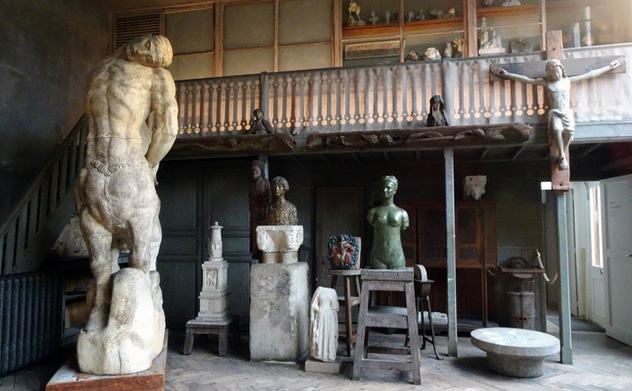
Although they are housed in buildings that contain the artists’ former studios, when visiting the Musée Bourdelle and the Musée National Gustave Moreau it also feels like you’re in a home. The Musée Bourdelle contains more than 500 works, including statues, paintings, pastels, sketches and Bourdelle’s personal collection of works by such artists as Delacroix, Ingres, Puvis de Chavannes and Rodin. One room was his sculpture atelier. The Moreau home was transformed by his 1895 decision to turn it into a studio and museum. Today the museum contains Moreau’s drawings, paintings, watercolors and sculptures, which he specified should be hung permanently in random order without regard to date or subject.
Ossip Zadkine was a Russian-born, primarily French artist who is best known as a sculptor. The Musée Zadkine, created in his former studio by his wife after his death, is dedicated to his work. While most of the makings of his studio have disappeared, the visitor somewhat has the experience of entering one.
In 2014, there was a show there of photographs by Sergey Prokudin-Gorsky, a Russian photographer who was best known for his pioneering work in color photography from 1909 to 1915. His technique involved taking three photos of each scene simultaneously using three attached cameras and color filters (like early tv projectors 100 years later). Then he overlaid the negatives (actually diapositives) and projected full color images onto a screen.
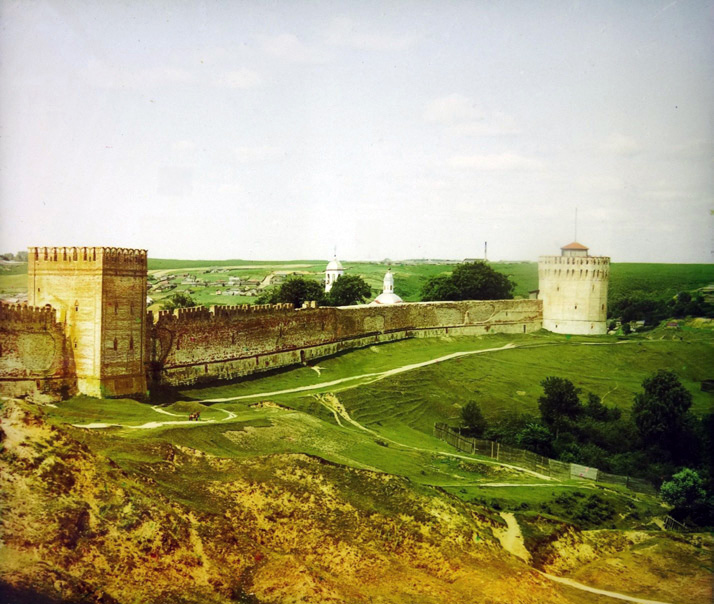
Starting in 2000, the diapositives, held at the Library of Congress, were digitized and combined to produce high-quality color images of the Russian Empire. (Coincidentally, in 2001, I worked on a set of books that would have reproduced many of those photos, so it was very special to see the exhibition.)
Ivan Konstantinovich Aivazovsky, a Russian painter famous for his seascapes, built himself a museum on the site of his former studio in the small town of Feodosia in the Crimea, where both he and a great uncle of mine were born. The museum is on the street where Uncle Leo lived. Czar Alexander III, who ruled Russia from 1881 to 1894, had moved his parents to the Crimea to promote Russian nationalism and Russification in the Crimean Peninsula, which had been part of the Russian Empire since 1783.
Monet’s studio at Giverny encompassed far more than his interior work area, since he created a pond and gardens and did many paintings en plein air. The Musée Maillol, organized by Aristide Maillol’s former girlfriend after he died, on the other hand, was never his studio. Similarly, although Matisse lived and worked in Nice for many years, both in the Palais de la Méditerranée, a major hotel, and in a nearby apartment, the eponymous nearby museum also was never his studio. It’s just another museum [sic], mainly featuring the cutouts he created late in life when his eyesight was failing him.
It’s a short walk from there to the Chagall Museum, which was created in 1973 during Chagall’s lifetime with the support of Minister of Culture André Malraux. It features a series of seventeen paintings that illustrate the books of Genesis, Exodus and the Song of Songs, and many other works by Chagall.
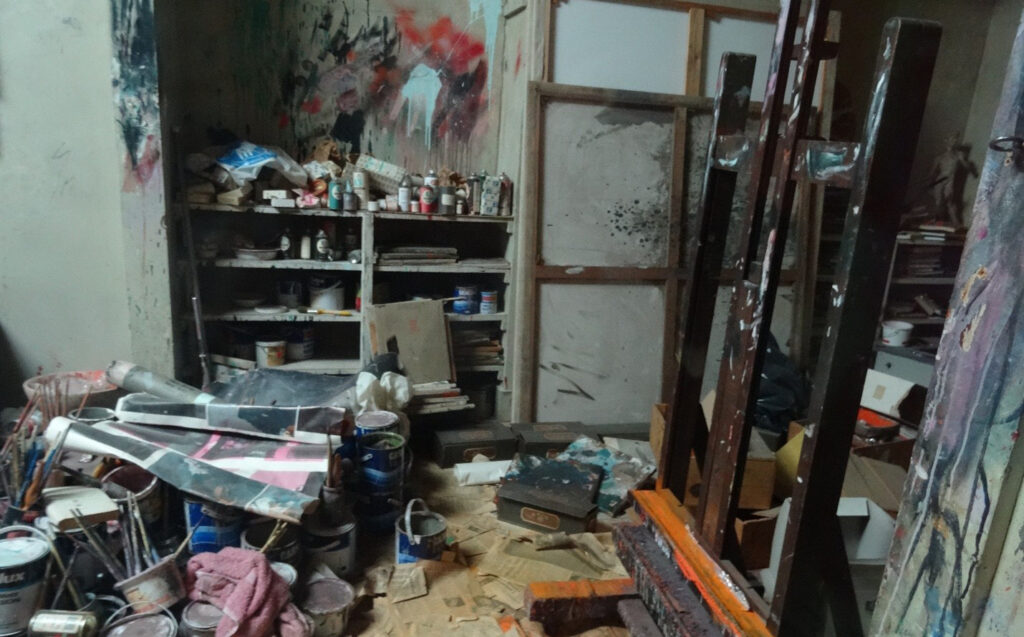
Thus there are museums built upon the former studios of great artists, and there are museums, quite different, dedicated to artists, but not founded on their studios. Both types tell us much about the artist, but precisely what is in the eye of the beholder. What does a photo of the studio of Francis Bacon in Dublin tell us about Bacon? G&S
Photos by Norman A. Ross
Leave a Comment