
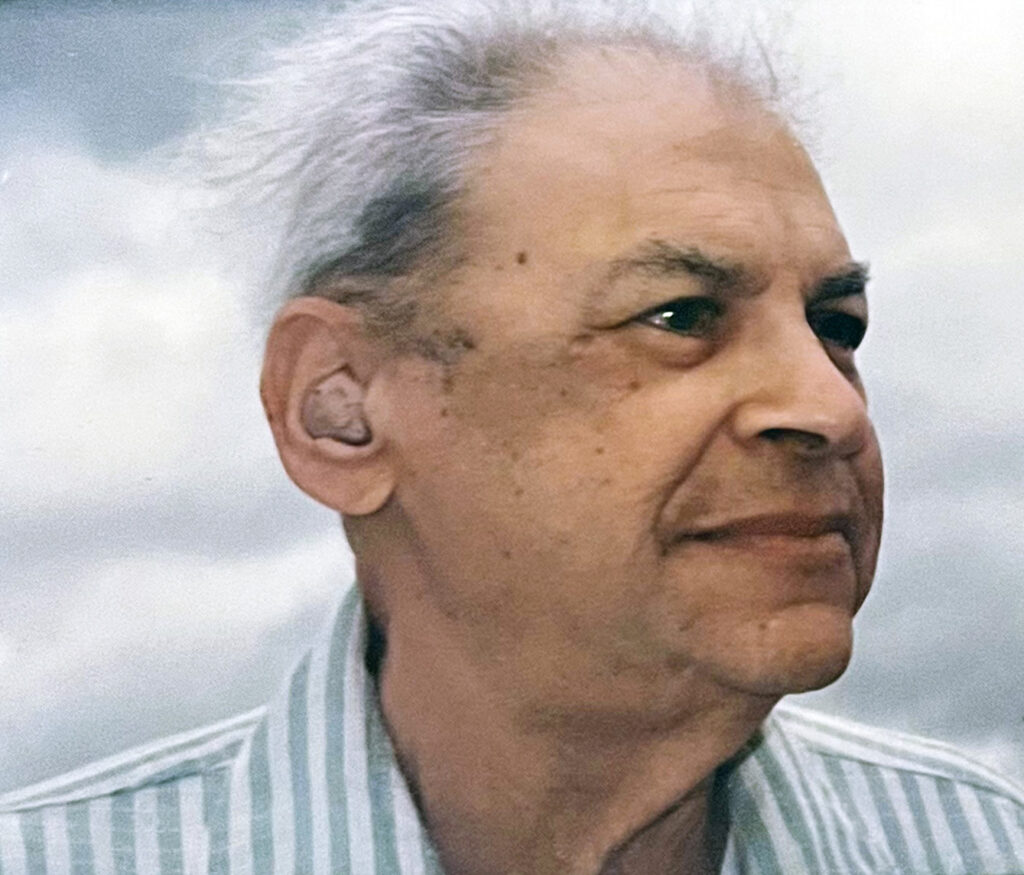
When I asked my father how he felt when his own father died, he answered, “we had enough food to eat.” Dad was 14 then. I was trying to find an emotional connection, since we each lost a parent before we turned 15. Obviously, he wasn’t ready.
When Dad was a child, his family moved to the Lower East Side and bought a candy store in the late 1920s, and had one of the first phones in the neighborhood. It was my father’s job to find people who got a call. I’m sure he was paid in candy not cash, but he was given responsibility early and took it seriously, like he did his whole life.
(His two mottos as an adult were “there’s a right way, and an easy way,” and “we’ll figure it out.” No pressure). The Great Depression hit hard, and they had to close the candy store. My grandfather died five years later, leaving my widowed grandmother and two teenage boys to survive.
Fortunately the US passed the Social Security Act and they went on Welfare, a boon to their financial security and a lifelong shame for them all. Our relationship became strained after my mother’s death in 1970, just before Mother’s Day and my tenth birthday. I was devastated, then numb, and rejected my father for not being my mother.
When my panic attacks hit shortly after her death, I ran to my older brother, Fred, for comfort. Only when he left for college in Michigan did I run to my father.
It wasn’t comforting at all, so I stuffed the panic down, along with almost all other feelings until I went away to college. I blamed him for not telling me she had a brain tumor.
His idea of “protecting” me only made the inevitable harder. I wasn’t capable of putting myself in his position then; he lost his wife and had to raise two kids on his own. Every tax season, Dad would have trouble breathing. His voice would trail off as he gasped for air mid-sentence. It occurred to me a few years ago that I must have been terrified of losing both parents before I graduated high school, another feeling I buried.
During my high school years, Dad invested in my future by buying me stock in General Motors and Electronic Data Systems. I would probably be a millionaire now if I hadn’t demanded that he sell them a couple of years later because I didn’t like the way he was controlling the stocks.
His two mottos as an adult were
“there’s a right way, and an easy way,”
and “we’ll figure it out.” No pressure.
He also asked me to type W-2 forms for his clients on our manual typewriter. I reluctantly said yes, despising every clack of the type bar. I could not wait to go to college, the farther the better.
When I went to UNC-Chapel Hill, my relationship with Dad hit a new bottom. As soon as I got settled into my dorm room, he rented out my room to a Queens College student.
Sometime during or after my senior year, I let my repressed anger guide me to successfully apply for residency in North Carolina. Being a legal resident allowed me to save thousands of dollars in graduate school tuition at the UNC-CH School of Library Science. I had no intention of ever moving back to New York.
Decades later I realized that I had acted out of anger when I decided to abandon my place (and cause) of birth, and it paid off for a change.
Once I became a legal resident of North Carolina, when I was 21, I subconsciously started to disinherit myself from my father and his second wife, Pauline. I still accepted money from them, with one hand, while pushing them away with the other.
The biggest regret of Dad’s life was not taking advantage of the GI Bill to go to Law School after WWII. Instead he became a CPA to support his wife and his blind mother. He carried that regret to my elder brother, Fred, and me, pushing us both to go to law school.
One out of two ain’t bad. I was the rebel who chose not to go. Law school would have interfered with my calling to write. I embraced the starving artist archetype: the perfect revenge. I lived it by underearning my whole career.
Dad always bombarded me with suggestions about making money and doing big things instead of what I was actually doing. I got a 99 in Physics in high school and he actually asked what happened to the other point.
As an adult, after I told him I was writing a skit for a community group I belonged to, he said, “You should be writing for Broadway.” I exploded in a way I never had before. I felt like I was never going to be good enough.
Lately, I have felt financial anxiety, manifested as pacing and shortness of breath while talking on the phone. Just like Dad during tax season. The more emotionally invested I am in the conversation, the faster I pace, and the harder it is to talk. Part of my inheritance from my father.
I eventually found the father I always wanted as a result of his terminal bone marrow cancer. His passion transferred from finances to gratitude for each day.
The weaker his body became, the stronger his spirituality. He became present in a way I had never expected. I was, too, from years of recovery.
Dad died the same day as Princess Diana. I knew his death was going to happen a few hours before, in a vivid dream that told me to go back to sleep instead of calling.
When the phone rang I was prepared. Pauline was in shock. He died while she was in the shower, the final act of an intensely private soul.
Sometime between my asking him how he felt when his father died and his own death, he said unsolicited, “I was devastated.” G&S



Leave a Comment