
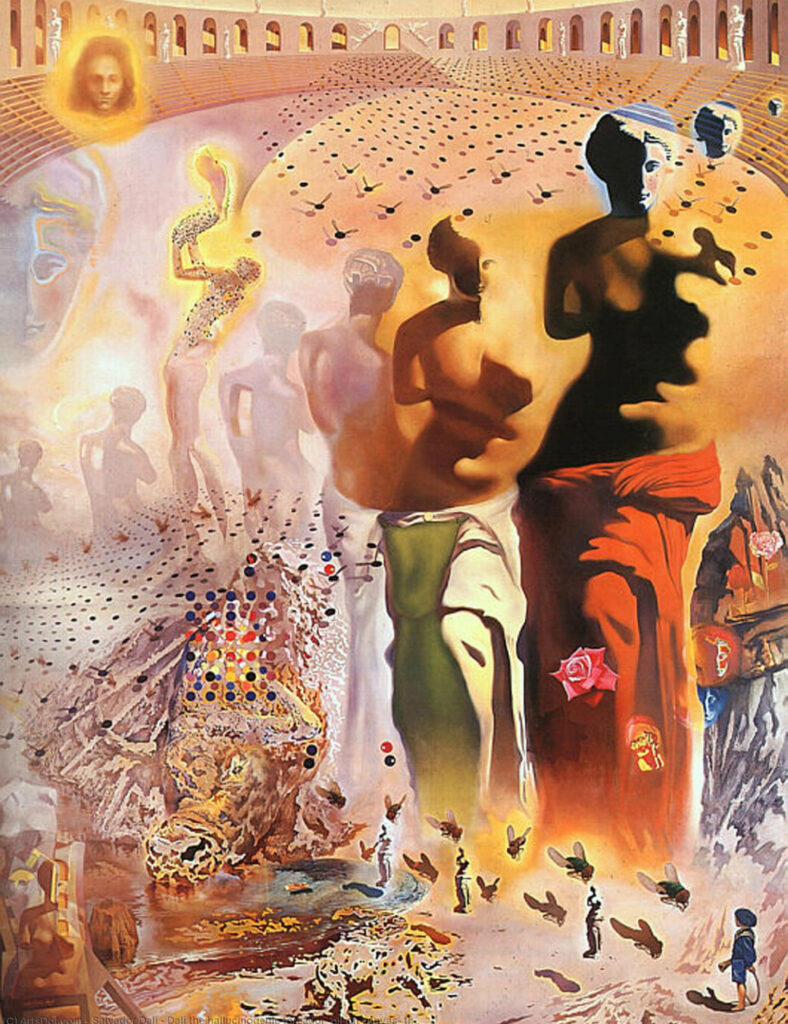
Oil on canvas, 398.8 cm x 299.7 cm, 1969–1970
Nacido en el tumulto intelectual del París de la década de 1920, el surrealismo no ha dejado de desplazarse, circular y transformarse. Lejos de constituir un capítulo clausurado de la historia del arte, permanece hoy como una forma vigente de pensar la imagen, el sueño y lo imaginario, territorio privilegiado del inconsciente.
Un movimiento en desplazamiento
Hubo una vez un movimiento que aspiraba a subvertir el orden establecido, liberar el espíritu del predominio de la razón y abrir el arte a las potencias del inconsciente. Surgido en torno a André Breton, el surrealismo se concibió simultáneamente como poético y revolucionario. En su gestación resultaron decisivas tanto las reflexiones sobre la imagen poética formuladas por Pierre Reverdy como las tensiones intelectuales heredadas del dadaísmo. Sin embargo, su historia no puede reducirse a un relato lineal ni estrictamente europeo. Desde sus inicios desbordó sus fronteras, se fragmentó y se desplazó, encontrando en otros territorios resonancias imprevistas.
Figuras, tensiones y equívocos
Si figuras como Salvador Dalí contribuyeron a otorgar al surrealismo una visibilidad espectacular, en ocasiones teatral, no agotan su profundidad ni su pluralidad. Del mismo modo, Marcel Duchamp, frecuentemente asociado al movimiento, pertenece ante todo al dadaísmo y a una vertiente conceptual, aunque sus gestos influyeran de manera decisiva en el imaginario surrealista. Estas figuras operan más como focos de tensión que como modelos excluyentes.
El giro mexicano
Un punto de inflexión fundamental se produce cuando el surrealismo abandona Europa para confrontarse con otras realidades culturales. Cuando Breton descubre México a finales de la década de 1930, afirma reconocer en él «el país más surrealista del mundo». Esta frase, ampliamente citada, revela menos una fascinación exotizante que un reconocimiento profundo. En México, el surrealismo no se impone como una teoría importada, sino que se manifiesta como una evidencia cultural: una coexistencia orgánica entre lo visible y lo invisible, lo sagrado y lo político, la memoria y la vida cotidiana. Aquí, el sueño no constituye una evasión de lo real, sino otra forma de acceder a él.
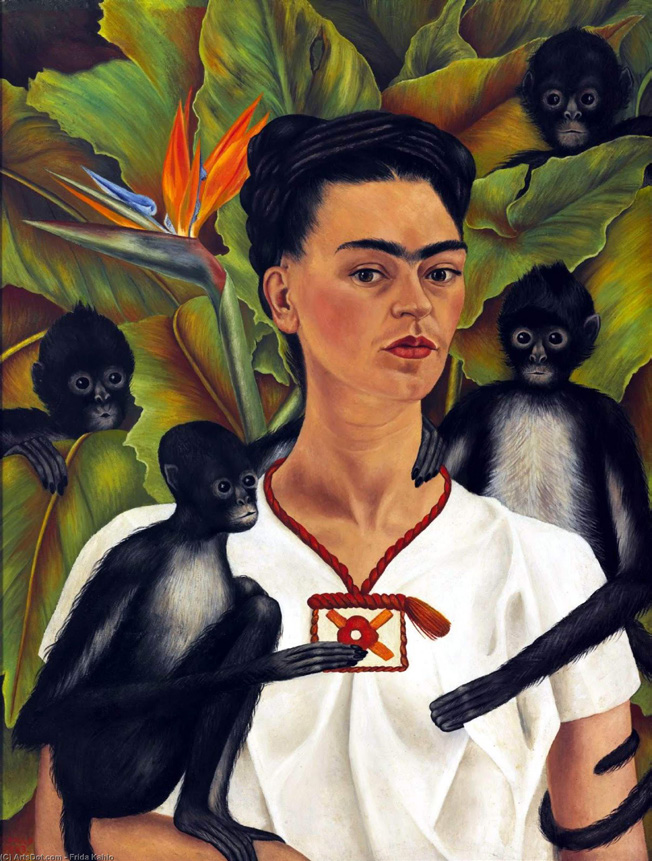
Oil painting, 81.5 x 63 cm, 1943.
The Jacques and Natasha Gelman Collection of Mexican Art © 2016
Banco de Mexico Diego Rivera Frida Kahlo Museums Trust, Mexico DF.
Frida Kahlo, a pesar del surrealismo
Frida Kahlo encarna de manera ejemplar esta ambivalencia. Frecuentemente vinculada al surrealismo a su pesar, rechazó esa etiqueta, afirmando que no pintaba sueños, sino su propia realidad. Su trayectoria entre Ciudad de México, Nueva York y París pone de relieve la complejidad de los intercambios artísticos transatlánticos, así como sus asimetrías. Invitada a exponer en París en 1939, se encontró con un medio fascinado por su obra, aunque reticente a reconocerla plenamente como artista autónoma. Reducida al papel de Madame Rivera, se convirtió en el síntoma de una mirada europea todavía incapaz de reconocer plenamente las voces femeninas y no occidentales. El libro de Misha Vaylon, Madame Rivera, una fugaz parisina, revisita con agudeza este episodio y las heridas que dejó.
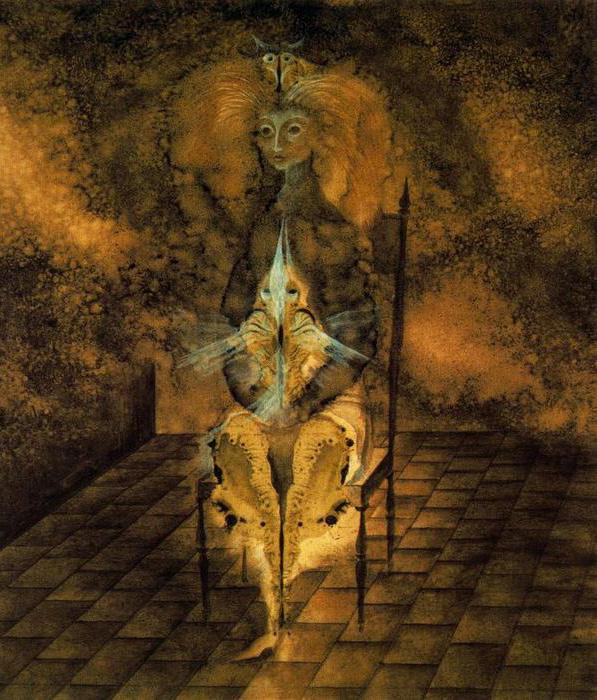
398.8 cm x 299.7 cm
Un surrealismo transformado
México no se limitó a acoger el surrealismo: lo transformó profundamente. Artistas como Leonora Carrington y Remedios Varo desarrollaron allí un lenguaje visual nutrido de magia, alquimia, mitología y memoria. Su obra, profundamente arraigada en el dibujo, se distanció de todo dogmatismo para explorar una vía más intuitiva e interior: un surrealismo entendido como experiencia mental y simbólica más que como programa manifiesto.
Continuidades contemporáneas
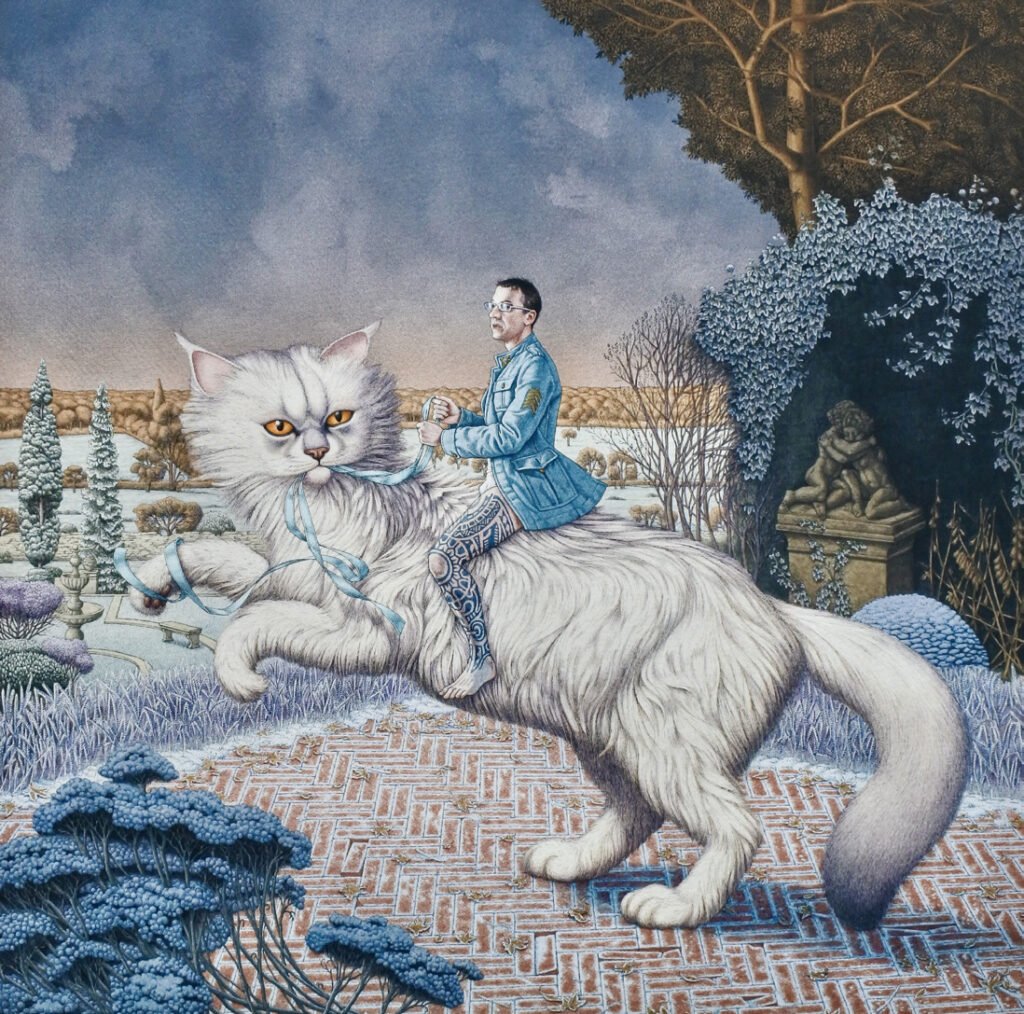
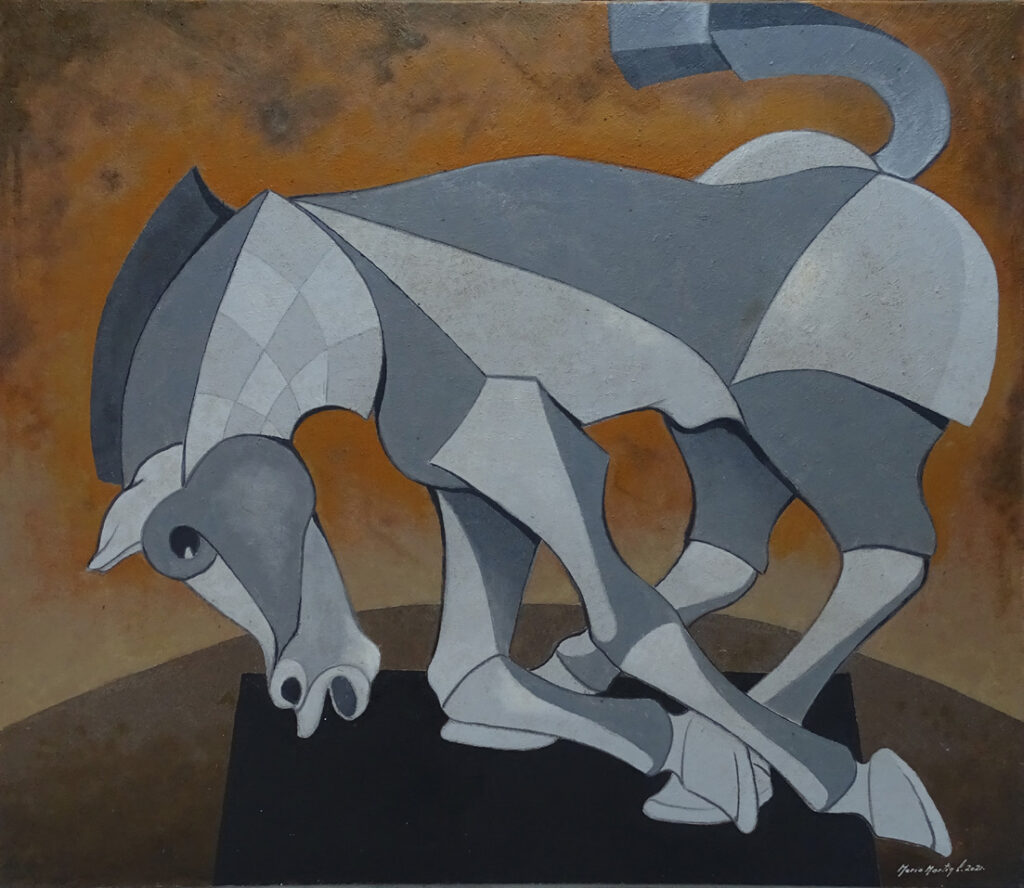
Este legado no se ha extinguido. Se prolonga en la actualidad en artistas que reivindican el dibujo como espacio privilegiado de lo imaginario. En México, Mario Martín del Campo se inscribe, pese a sí mismo, en esta continuidad, ya que se define ante todo como un «realista fantástico», puesto que su obra representa su imaginario y no sus sueños. Artista de prácticas diversas, ha desarrollado durante varias décadas un universo en el que el dibujo, la pintura y el objeto dialogan con el símbolo y la metamorfosis. En ocasiones se define como un «realista imaginario», subrayando esa tensión fértil entre la precisión del trazo y la desrealización del mundo. Recientemente distinguido por el conjunto de su trayectoria profesional, ha optado —en un gesto poco habitual— por apartarse temporalmente de las instituciones museísticas para regresar al espacio galerístico. Su exposición en la C3 Art Gallery de Ciudad de México, en marzo de 2026, recuerda que el surrealismo es ante todo una experiencia viva y encarnada, y no un legado petrificado. G&S
English Version
Once upon a time… or is it still… Surrealism?
Born in the intellectual turmoil of 1920s Paris, Surrealism has never ceased to move, circulate, and transform itself. Far from constituting a closed chapter in the history of art, it remains today a living way of thinking about the image, the dream, and the imaginary—a privileged territory of the unconscious.
A movement in motion
Once there was a movement that aspired to subvert the established order, to free the spirit from the dominance of reason, and to open art to the powers of the unconscious. Emerging around André Breton, Surrealism conceived of itself as both poetic and revolutionary. In its formation, the reflections on the poetic image formulated by Pierre Reverdy were decisive, as were the intellectual tensions inherited from Dadaism. Yet its history cannot be reduced to a linear or strictly European narrative. From the outset, it overflowed its borders, fragmented, and shifted, finding unexpected resonances in other territories.
Figures, tensions, and misunderstandings
While figures such as Salvador Dalí contributed to giving Surrealism a spectacular, at times theatrical, visibility, they do not exhaust its depth or its plurality. Likewise, Marcel Duchamp, frequently associated with the movement, belongs above all to Dadaism and to a conceptual line of thought, even though his gestures decisively influenced the Surrealist imagination. These figures function more as sites of tension than as exclusive models.
The Mexican turning point
A decisive shift occurred when Surrealism left Europe to confront other cultural realities. When Breton discovered Mexico in the late 1930s, he claimed to recognize in it “the most Surrealist country in the world.” This widely quoted phrase reveals less an exotic fascination than a profound recognition. In Mexico, Surrealism did not impose itself as an imported theory but manifested as a cultural reality: an organic coexistence between the visible and the invisible, the sacred and the political, memory and everyday life. Here, the dream does not constitute an escape from reality but another way of entering it.
Frida Kahlo, despite Surrealism
Frida Kahlo embodies this ambivalence in exemplary fashion. Frequently linked to Surrealism despite herself, she rejected the label, insisting that she did
not paint dreams but her own reality. Her trajectory between Mexico City, New York, and Paris highlights the complexity of transatlantic artistic exchanges, as well as their asymmetries. Invited to exhibit in Paris in 1939, she encountered a milieu fascinated by her work, yet reluctant to fully acknowledge her as an autonomous artist. Reduced to the role of Madame Rivera, she became the symptom of a European gaze still unable to fully recognize female and non-Western voices. Misha Vaylon’s book, Madame Rivera, a fleeting Parisian, revisits this episode, and the wounds it left, with subtle insight.
A transformed Surrealism
Mexico did not merely receive Surrealism; it transformed it profoundly. Artists such as Leonora Carrington and Remedios Varo developed there a visual language nourished by magic, alchemy, mythology, and memory. Their work, deeply rooted in drawing, moved away from dogmatism to explore a more intuitive and interior path: a Surrealism understood as a mental and symbolic experience rather than as a manifest program.
Contemporary continuities
This legacy has not disappeared. It continues today in artists who claim drawing as a privileged space of the imaginary. In Mexico, Mario Martín del Campo finds himself, despite himself, inscribed within this continuity, as he defines himself above all as a “fantastic realist,” since his work represents his imagination rather than his dreams. An artist of diverse practices, he has developed over several decades a universe in which drawing, painting, and objects engage in dialogue with symbol and metamorphosis.
At times he describes himself as an “imaginary realist,” underscoring this fertile tension between precision of line and the derealization of the world. Recently honored for the entirety of his professional trajectory, he has made the uncommon choice to step away temporarily from museum institutions in order to return to the gallery space. His exhibition at C3 Art Gallery in Mexico City in March 2026 reminds us that Surrealism is, above all, a living and embodied experience rather than a fixed legacy. G&S

Leave a Comment