
Introduction to Fuka
I first met Fuka Kojima, a young Japanese dancer, at the beginning of this summer through several distant friends who belong to a community group called “NY entateme no kai,” founded by a street performer, Toshihiko Nakazawa.
When she visited the shared photo studio I was using in the Lower East Side, I happened to be experimenting with my lighting equipment for portrait sessions. Toward the end of the day, perhaps a little bluntly, I asked her to sit on a stool and pose. She hesitated—she wasn’t wearing makeup, and understandably wasn’t eager to be photographed—but graciously agreed. She posed for the lens responding to my suggestion to strike a pose. That is the moment I realized, “Oh, she is a dancer!”.
At first, I called her “Fuka-chan,” chan being the affectionate Japanese suffix for someone much younger. But after three months, I realized “Fuka-san,” san being an honorific suffix, was more fitting—she had earned the respect that the title conveys. How did that shift happen? That’s the story I want to tell.
It was a hot summer day, as we were strolling the Lower East Side with ice-cream in hand. A recent graduate of Alvin Ailey Dance Company, Fuka opened up and began talking about herself. She grew up in Kobe and started ballet lessons at the age of five. Like many ballerinas, she dreamed of becoming a Takarasienne, a member of Takarazuka, the glamorous French-inspired all female Revue theater in Japan. With a hint of self-deprecation, she remarked, “I have small eyes and a small mouth. My nose is small too,” and she continued, “Also I’m not tall enough to be considered for Takarazuka. There was a time I felt lost about my future, you know those were somewhat painful years for me and I still don’t have a boyfriend,” she concluded with a smile.
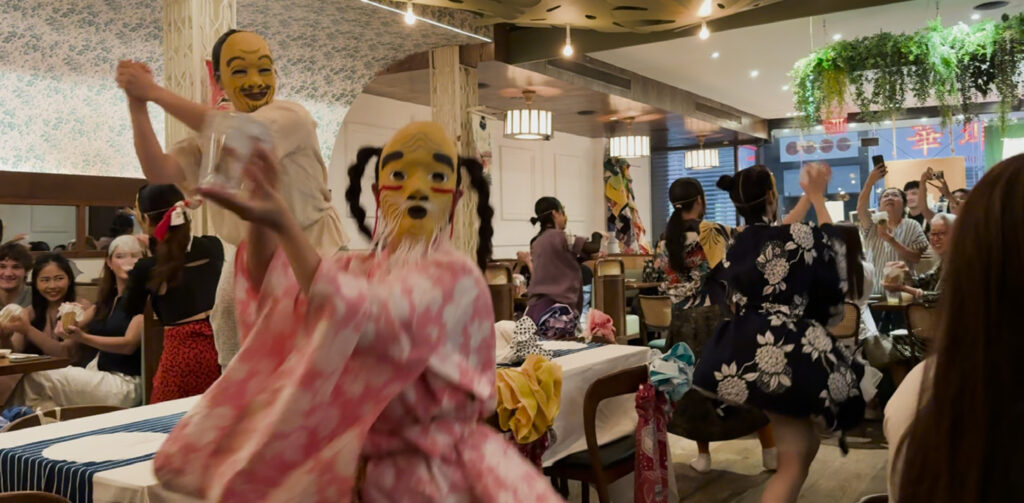
Her honesty was unexpected and disarming. It was one of those moments when I wished I had been filming—a glimpse of her vulnerability and humanity that draw me closer to her artistic essence and highlighted how far she came. Three months later, I received a message from her: “We are putting on a dinner show at Hakata Tonton. We would love for you to see our performance!” In just 80 days, Fuka brought her vision to life; she transformed Shichifukujin—the Seven Lucky Gods, a 500-year-old Japanese folklore tale—into a captivating dance performance featuring seven dancers from “Edamovement,” the group she co-founded. Each dancer expressed their interpretation of the deities through their movements. This performance marked a significant advancement from their main stage, currently showcased at Japan Fes, a street food festival that spans across NYC.

A Professional Ethos
What sets Fuka apart is not just her creativity, but her conviction. “Dancers should receive stable monthly earnings, like salarymen,” she told me with her Kansai-ben (a dialect of Western Japan). “Otherwise, you can’t call yourself a professional.” A bold statement, but one that reflects her determination to reshape her path. She has demonstrated that talent, timing, and vision can converge to create momentum, regardless of age. In three short months, Fuka Kojima has proven herself not only as a dancer, but as an artist capable of building community, reinterpreting tradition, and inspiring others. This is backed by a young audience member who said he had once been a dancer but stopped due to personal struggles. Watching Edamovement reignited his passion for dance.
She may not have become a Takarasienne, but in New York she has found her stage—one where tradition and innovation meet. I, for one, look forward to seeing where “Fuka-san” will take us next. G&S




Leave a Comment