
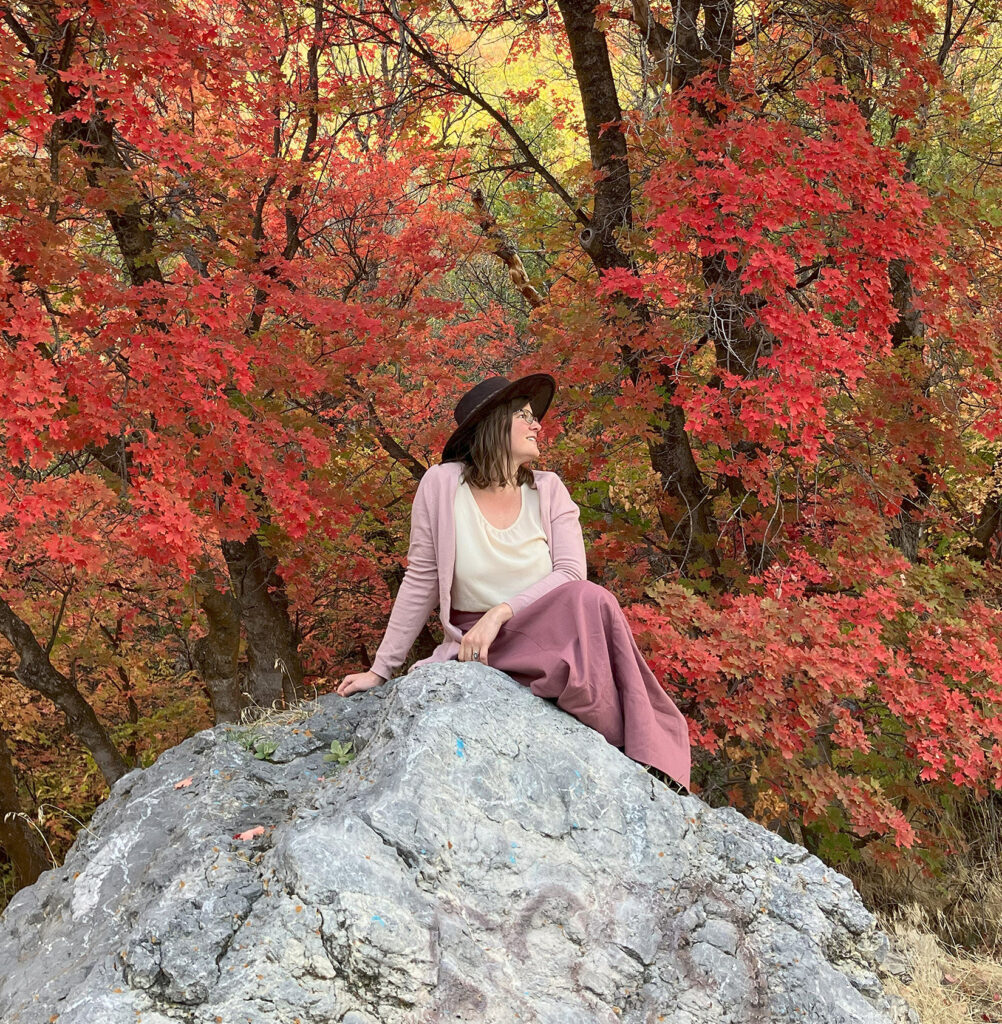
What you wear is a deeply intimate portrayal of who you are. We can’t
‘dress up’ every day, and it’s good that we live in a time when people can wear whatever they want with more general acceptance. And yet…I miss aspects of the past, where you would wear beautiful, well-made clothing. There’s a picture of my grandmother with my mother and aunt as little girls, walking downtown in the 1940s. They are all wearing dresses, and the little girls are wearing gloves. They dressed up to go into town to go shopping. They wanted to look good, to make an occasion of it. This is missing from modern culture.
I admire the care and quality I see in some of the historical clothing I’ve collected over the years—delicate silks and cottons, sturdy wools, the way a skirt was pieced and gathered, the use of decorative buttons, all expressing so much care and beauty.
The beauty is important. Fashion is a reflection of its time, but like art, it elevates our daily existence. For example, bias-cut, feminine dresses dominated the 1930s, when America was in the Great Depression; and playful, large hats came into fashion during the 1940s, when the world was at war.
When I was a little girl, playing with my American Girl dolls, I longed to wear historical clothing. The shapes of the dresses, the patterns of the fabric seemed so beautiful to me. So much of the past appealed to me, and I was raised in a household that fostered this idea.
I was about seven years old when my mother became friends with the children’s book author and illustrator Tasha Tudor, who lived in the woods of Vermont. My mother visited her several times, and they kept up a regular correspondence. Seeing the example of how Tasha lived, how she collected antique clothing and wore a practical version of 19th century working-class clothing increased my feelings of wishing I could dress in an old-fashioned way.
When I reached my early teens, I became obsessed with everything 1920s and 1930s. I began watching silent films, listened to the music, and began buying original clothing from that time, which was readily available still in vintage and antique clothing shops. When I couldn’t wear original clothing, I would find skirts, blouses, sweaters and hats that fit the look for me.
It wasn’t until I was in my 30s, studying archaeology at the University of Glasgow, that I finally learned how to sew. I was part of a youth group at church, and an older volunteer couple moved to the area to help out. The wife, a charming woman named Birdie, offered to teach me how to sew.
. . .start with something you really want, and the motivation to have the final product will see you through the learning process.
We decided to learn on a dress that my sister Heather had started years ago for an authentic 1830s look, complete with puffy sleeves. It wasn’t an easy or beginners pattern, but beyond learning how to sew, I also learned something important: start with something you really want, and the motivation to have the final product will see you through the learning process.
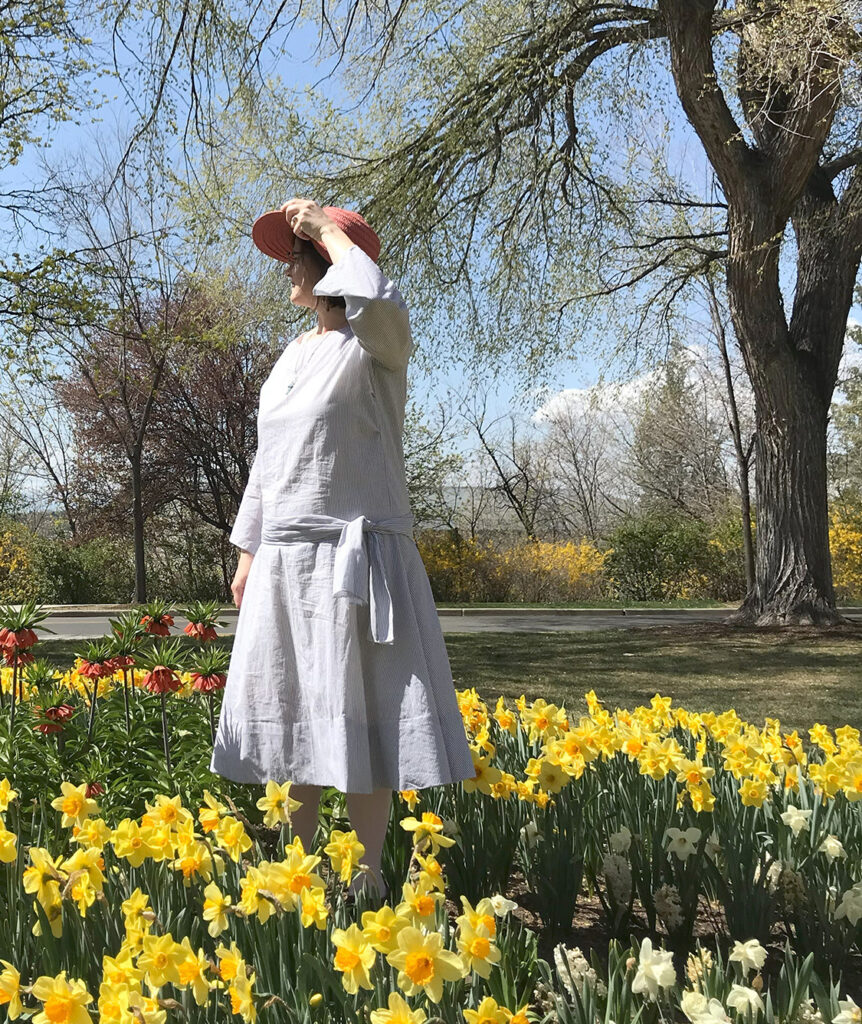
While I was still at university, I made another dress, and a pair of Regency era stays (early corset). I returned to the states after graduating, and in the years that followed, I kept creating historical clothing I could wear on a daily basis.
I made a couple of Regency era dresses, which I’ve worn to fancy balls or for Halloween, but most of what I’ve sewn is clothing I could wear every day.
The 1910s is one of my favorite periods in clothing history. It moved away from the blousy “Gibson-Girl” style of the turn of the century, but hadn’t become as boxy and modern as the 1920s. It’s a tailored, elegant era that I gravitate towards.
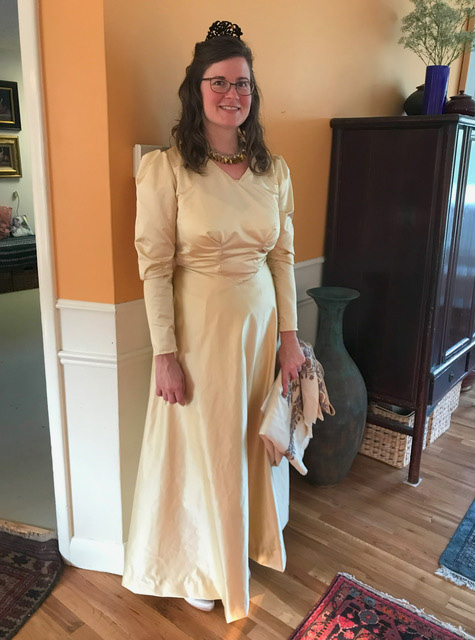
Every time I sew something new, I learn from the experience, especially if it’s a pattern I’ve used more than once. There is a dress pattern from 1917 that I have used three times, and each time I feel like I understand the pattern better. With a dress pattern from 1939, I have made a summer dress, a dress inspired by a film, and even my wedding dress.
Wearing historic clothing changes how you feel; certainly when you’re wearing period-accurate underclothing, such as shifts and corsets or stays, but also without. I made myself two 1910s corsets, and would wear them with the clothing I’d made. But the clothing is such that it looks good over modern underwear, and this is how I wear it most of the time.
In one of my archaeology courses, we studied object agency—how things created by humans for a specific purpose can also have uses and purposes outside of the original design. Our professor asked us to bring in such an object from our lives and explain it to the class. I brought in a pair of long stays that my sister had made for me, and which I had worn with the first dress I made. I explained how obviously the stays/corsets were made to give structure to the figure, to create a specific silhouette, and that effects how you feel when you wear them. Yet, their influence extends beyond that. The way I carry myself, the way I feel walking around, extends beyond their mere function.
Whether wearing a corset or not, this is what I love about historical clothing. The way a 1910s skirt hugs your waist; the way a dress swishes around your legs; the texture of the fabric; all contribute to how you go throughout your day, how you walk, how you feel about yourself. To me, modern clothing doesn’t have this power. Perhaps in creating my own wardrobe, I’ve become a partner with the clothes, a partner with the fabrics, skills and methods used by men and women from the past. I can partake of that beauty and it enriches my life. G&S


Leave a Comment