
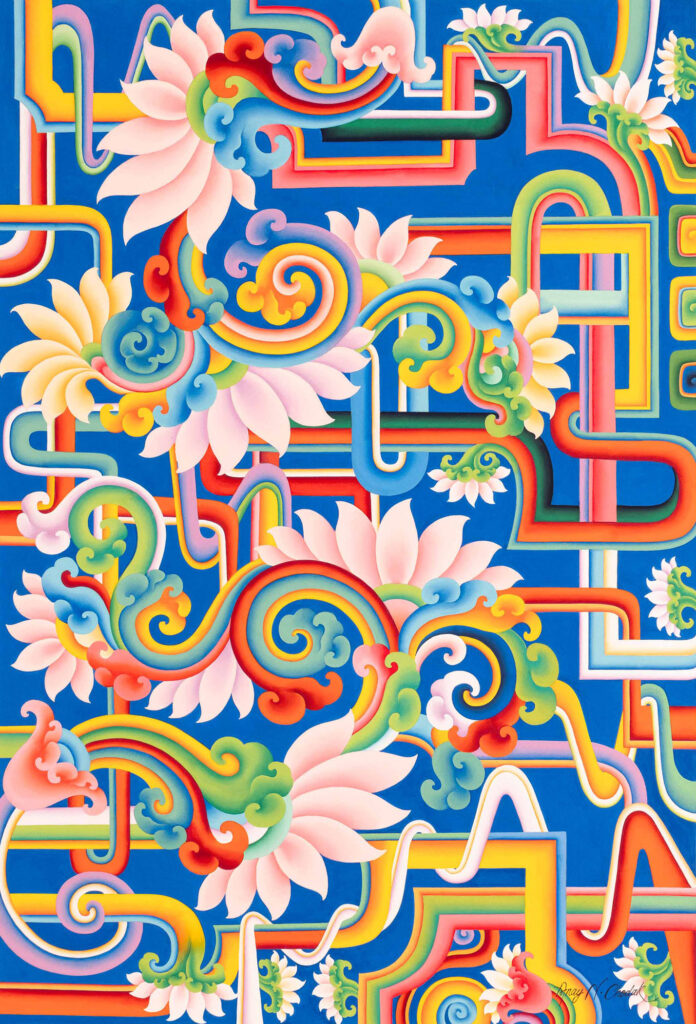
Anay Ngawang Chodak is that rare contemporary artist whose work reflects the depth of Buddhism. And yet, his dazzingly inventive paintings are also profoundly open to modern considerations. Anay says that he hopes his paintings can act as a bridge between Buddhist religious spirituality and contemporary expression.
In his first American solo exhibition last June, “Modern Reflections of Wisdom and Compassion” at Kate Oh Gallery on New York’s Upper East Side, Anay’s work is presented as a Buddhist compass to navigate a complex and troubled world. By merging traditional Buddhist imagery with modern aesthetic forms, he introduces Buddhist culture to the contemporary art scene.
Anay has a distinguished Buddhist lineage. He is a direct descendant of a revered Buddhist yogi master. Born in Nepal (1980), Anay’s art education included several apprenticeships with Newari and Tibetan Buddhist thangka masters. (Thangka refers to Tibetan Buddhist paintings on cotton or silk, usually depicting Buddhist deities.) “Art has been an unwavering passion that has been an inseparable element of my being since childhood,” he says, From 2003 to 2021, Anay was artist-in-residence for the Dalai Lama in Dharamsala, India, the residence of the exiled Tibetan spiritual leader. He perfected his thangka painting technique and learned how to use Japanese pigments made exclusively from minerals. Anay also uses gouache paints, 24K gold on handmade cotton canvas and French cold and hot-pressed paper.
Anay says that he hopes his paintings can act as a bridge
between Buddhist religious spirituality and contemporary expression
Anay’s work is more abstract than traditional thangkas. He uses squares, circles, rectangles, intertwining forms to emphasize the human condition, our links to one another. “By weaving timeless, universal Buddhist values with modern sensibility, I hope to awaken a deeper sense of wisdom and compassion in the viewer,” he says, “In my artworks, you can find the expressions and embodiments of my Buddhist philosophical understanding of the source and cause of happiness and suffering we all experience which intrinsically relates to ‘interconnectedness’ as a whole.”
Anay, a lifelong Buddhist practitioner, studied under various teachers mainly with the revered Buddhist mystic, Khandro Kunga Bhuma Rinpoche. She is recognized as the State Oracle of Tibet. Anay joined several of her retreats and sacred pilgrimages in India and Nepal. (Rinpoche is an honorific title meaning “precious one” whose role is to guide others to the path of enlightenment.)
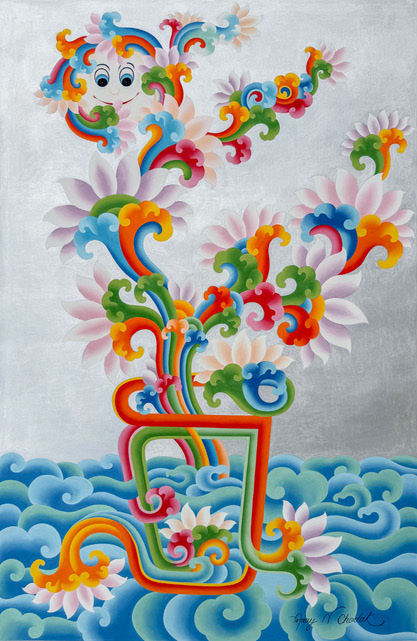
At first glance, Anay’s paintings exhibit a sunny and optimistic quality akin to Van Gogh’s sunflowers or the bright and buoyant swimming pools of David Hockney. Some of his artwork resembles pop-art imagery with his “happiness pods” that have cartoon-like wide starry eyes.
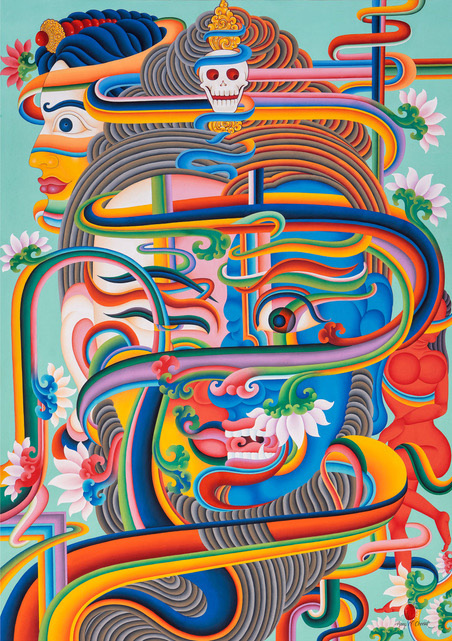
Anay’s glorious painting, Meditative Awareness of Inner Beauty represents the mind’s meditative state. Its skull image serves as a reminder of the impermanence of life and the female figure symbolizes the female qualities of wisdom.
Currently, Anay, his wife and six-year-old daughter divide their time between Manhattan and Kathmandu where he is working on his second large-scale commission for the Hilton Hotel.
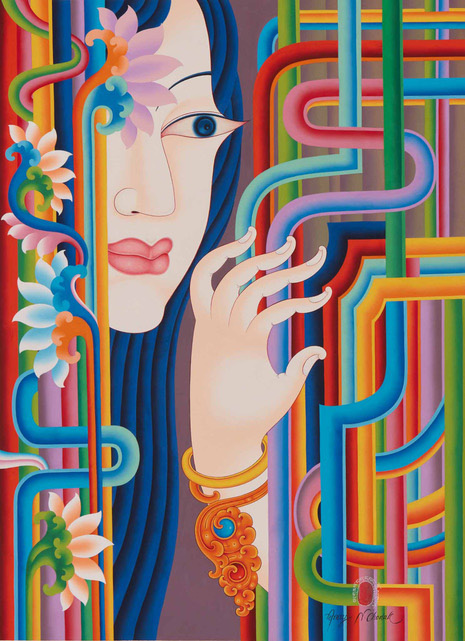
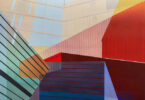
Even without explanatory labels and little understanding of Buddhist teachings, Anay’s paintings are memorable for their array of colors —sunrise pinks, blues, and gold. His spirals and symmetries are at once contemporary and traditional.
Anay’s approach to painting demonstrates a mastery of ancestral techniques along with a willingness to experiment and innovate while staying true to his Buddhist heritage.
For their sheer pictorial beauty, they dazzle—whatever level of enlightenment you are seeking, you are bound to find it. G&S

Leave a Comment