
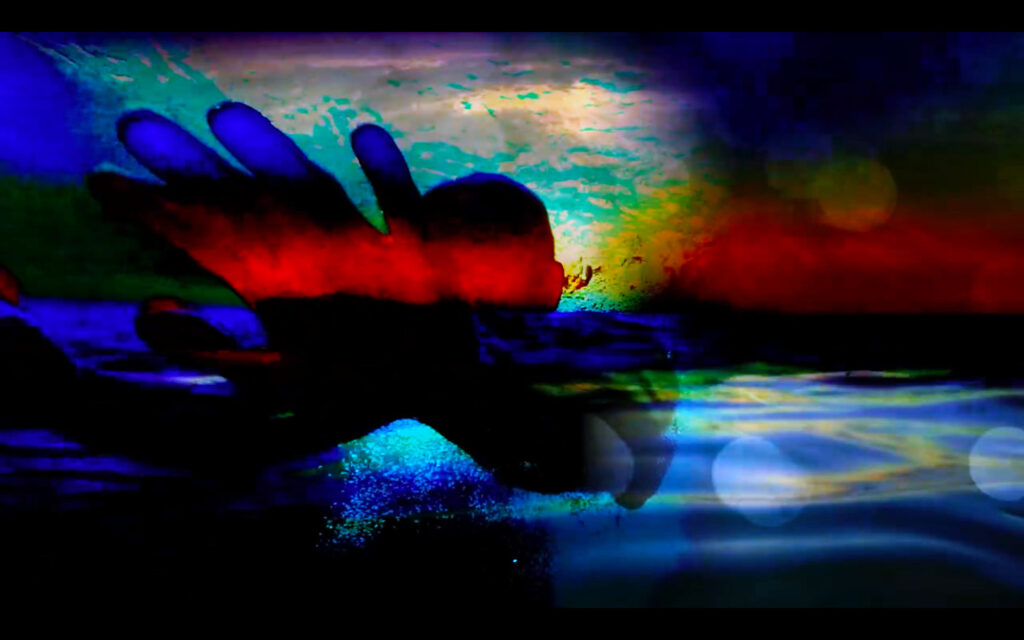
Ever hear the expression: It’s how ya tell ’em? Well, it is, “how ya tell ’em.” The film Pauline is the telling of a tale that is so efficient, so artful, so richly illustrated that one suspects this mode of expression may be the future of storytelling.
Storytelling, or the simple transference of information as we have known it, is obviously undergoing titanic change. Fountain pens and bottles of ink have gone from being common desk implements to elegant curiosities and newsprint, envelopes, postage stamps and books would seem to be following—all with astonishing speed. In a Sunday New York Times column entitled “Come With Me If You Want to Survive An Age of Extinction,” Ross Douthat writes:
“For entertainment the small screen replaces moviegoing and live performance. For shopping and selling, the online store supplants the mall. For reading and writing, the short paragraph and the quick reply replace the book, the essay, the letter…short, shorter, shortest.”
It is true that we live in perilous times; how much more perilous than ever before remains to be seen. In Plato’s dialogue Phaedrus, Socrates, separated by 2400 years from Douthat, rails in chorus with him against an even more basic medium, the written word, as not only inferior to its parents, thought and spoken rhetoric, but actually an enemy of memory by being an external reminder, a crutch that masquerades as knowledge and weakens the mind. No need to wonder how little the Athenian sage would mourn the passing of books, essays and letters, let alone shopping malls and moviegoing. Oh my.
In the looming shadow of global warming, citing distinctions between successive modes of communication may soon seem trifling. Meanwhile, just as writing took hold and spread in ancient Greece, new technology has spawned legions of media-savvy presenters, filmmakers, diarists, blogists. Clearly, this is not all good; but, as with any medium, there will be those with gifts. Annie Gallup is one of these.
…what would you be capable of?
I don’t think I am spoiling anything for the reader by saying that Pauline is the story of an attempted murder that goes not only unpunished but unacknowledged. What I am leaving for you to discover, dear reader, to revel in if you are resourceful enough to find this movie, are the details of this crime and its aftermath, how these details are worded, how those words sound as delivered through this filmmaker’s heartbreakingly airy, beautiful voice and her steady, understated yet urgent delivery. Gallup is a musician, a singer and a songwriter and, as would follow, a storyteller.
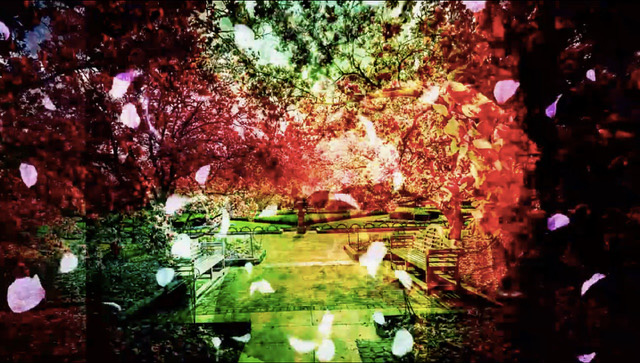
She is also a visual artist. The look of Pauline reflects a filmic language that is Gallup’s own. Through numerous film projects, many of which can be found by looking up “Annie Gallup” on YouTube, Gallup has developed a style of video illustration that is dizzyingly complex, an amalgam of moving and still images ingeniously overlain, juxtaposed, colorized, matted and combined to serve a dreamlike illustrative purpose that all the visual effects in the electronic toolbox could not support without the discipline of an artist’s eye. Watching Pauline, the eye luxuriates. The colors are rich, the images ethereal and gracefully suggestive.
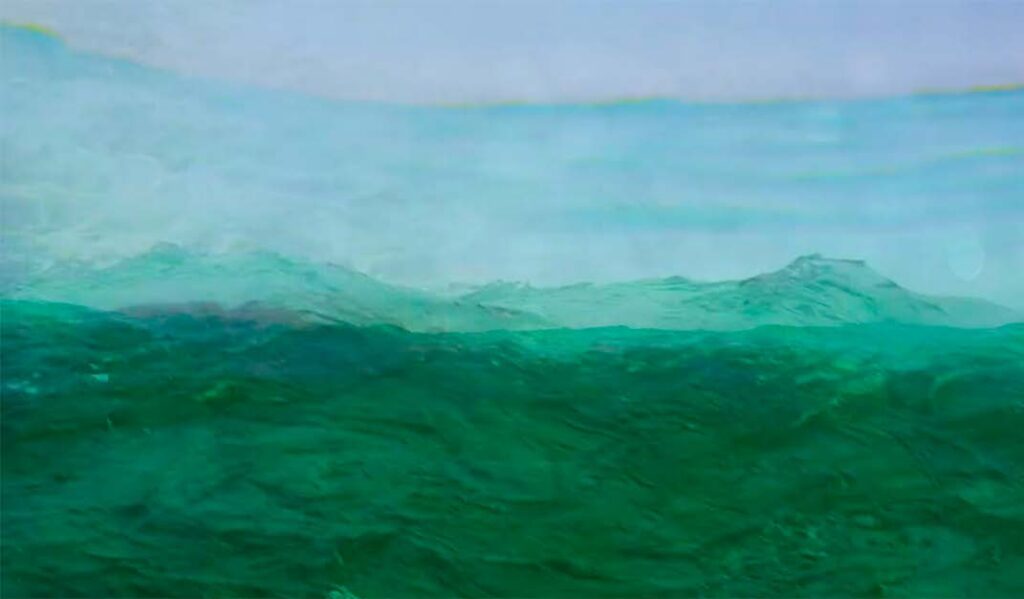
But—and I believe I am safe in saying this—it is the sound that rests at the core of this piece as it does in most of Gallup’s work. It would be madness, therefore, not to mention Harvey Jones’ delicately insistent musical score that insinuates itself on one’s memory of the film, making it seem almost more heard than seen. Jones collaborates with Gallup frequently, as does Peter Gallway, who is credited with mixing and mastering the soundtrack of Pauline—subtle hints of birdsong, water, bubbly turbulence. These three have produced a lot of art.
(See: YouTube.)
Pauline is two minutes-fifty seven seconds long, not long enough to give today’s shortened attention spans much of a workout. But in that short period of time, the viewer is transported to a faraway place, witness to a heinous act, brought home again, left in bafflement but counseled:
And finally,
there’s the surface.
And there’s an undercurrent.
And both are true …
at the same time …
all the time.”
G&S
Annie Gallup’s work can be found on YouTube
and at www.anniegallup.com
time-limited access on galleryand.studio



Leave a Comment